The hospitality industry in Bangkok has a specific local SEO challenge that other business types do not. The customer base is split between Thai locals searching in Thai and international visitors searching in English, often using entirely different platforms. A restaurant that optimises only for one group leaves significant revenue on the table.
The good news is that the overlap in strategy is substantial. Most of the actions that help you rank for English tourist searches also help you rank for Thai local searches. The differences are in the platforms prioritised and the language of the content, not in the fundamentals of how local SEO works.
Google Business Profile: the non-negotiable starting point
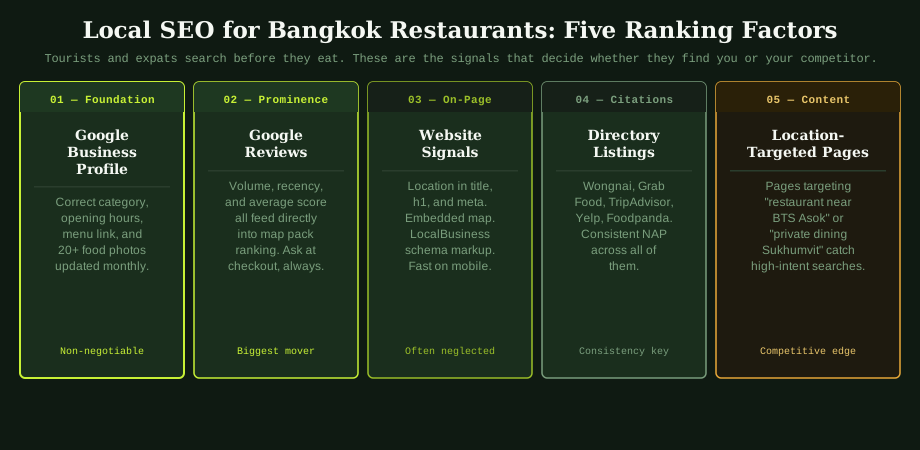
For any Bangkok hospitality business, the Google Business Profile is the single highest-leverage piece of real estate available online. It determines whether you appear in the map pack, what customers see before they click, and how Google understands your business. An incomplete or poorly maintained GBP is the most common reason a genuinely good restaurant fails to appear in local searches.
The full guide to optimising a Google Business Profile in Thailand covers this in detail, but for restaurants specifically the most impactful elements are:
Primary category. Choose your cuisine type, not the generic "restaurant" category. "Thai Restaurant," "Japanese Restaurant," "Seafood Restaurant" are all specific categories that trigger relevant searches. The primary category is one of Google's strongest ranking signals for local results.
Photos. Food photography is the primary conversion driver on a restaurant GBP. Businesses with 30 or more food and interior photos receive substantially more clicks than those with five generic shots. Update photos monthly. Include food, interior, exterior, team, and if applicable outdoor seating. Every new photo is a fresh signal that the profile is actively managed.
Opening hours. Keep these accurate, including special hours for public holidays. A tourist who arrives to find you closed because your GBP showed wrong hours will leave a negative review. A listing that shows "closed" when you are actually open loses customers before they even leave their hotel.
Menu link and attributes. Add a direct link to your menu. Add every relevant attribute: dine-in, takeaway, delivery, reservations, outdoor seating, parking. These attributes appear in filtered searches and in the knowledge panel when users are comparing options.
Two audiences, two search patterns
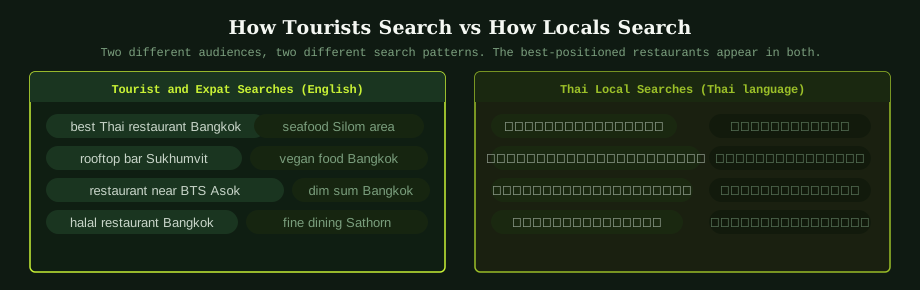
International visitors and expats search in English, typically using location modifiers like "near BTS Asok" or neighbourhood names like "Thonglor," "Silom," or "Sathorn." They use Google Maps almost exclusively for discovery. They are more likely to read reviews before deciding and to filter by rating and distance.
Thai locals search in Thai, often using Wongnai as their primary food discovery platform alongside Google Maps. Search patterns tend to be more cuisine-specific and neighbourhood-specific. "ร้านอาหารอร่อยสุขุมวิท" (delicious restaurant Sukhumvit) gets more searches from Thai users than "best restaurant Sukhumvit" does.
The implication for restaurants targeting both groups is clear: your GBP should have information populated in both Thai and English. Your website, if it has the capacity, should have Thai-language content for core pages. And Wongnai deserves as much attention as your Google Business Profile for the Thai customer segment.
Reviews: the fastest path to map pack movement
In my experience working with Bangkok hospitality clients, review volume and recency is the single fastest-moving local ranking lever available. A restaurant that goes from 40 reviews to 120 over three months, while maintaining a rating above 4.5, will move up in the map pack results for its target searches during that same period.
The full guide on getting more Google reviews as a Thai business covers the mechanics, but for restaurants the most effective channel is in-person at checkout. A small card on the table or at the register with a QR code linking directly to the review form is the simplest implementation. Staff who mention it verbally when presenting the bill dramatically increase the conversion rate.
Responding to every review matters equally. A restaurant that responds to its reviews, including negative ones, signals to Google and to potential customers that real people are running the business and that feedback is taken seriously. A wall of unanswered reviews looks abandoned even when the rating is high.
Website signals: what most restaurant sites get wrong
Most Bangkok restaurant websites are built to look good, not to rank. They have beautiful full-screen food photography, an ambient background video, and almost no text that Google can read and interpret. This creates a situation where the site itself contributes almost nothing to local search visibility.
A restaurant site that wants to rank locally needs a few things that most do not have. The location should appear in the page title, the H1 heading, and the meta description. A physical address should be present in the footer in text format, not just embedded in a map. The site should load fast on mobile, because the majority of restaurant searches happen on a phone while someone is already out. And the site should have structured data markup using the Restaurant schema type, which allows Google to read and display opening hours, cuisine type, price range, and menu information directly in search results.
An embedded Google Map on the contact or about page is also worth including. It is a minor signal but it confirms the physical location to Google and makes it easier for customers to get directions without leaving your site.
Location-targeted content: the competitive edge most restaurants ignore
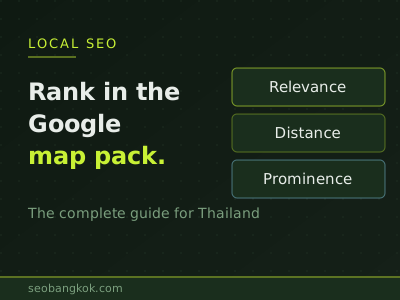
The map pack shows three results. Below the map pack, organic results appear. A restaurant that ranks in both captures far more visibility than one that appears only in the map pack.
Creating a page targeting "private dining Sukhumvit" or "birthday dinner Thonglor" or "halal restaurant Silom" addresses specific high-intent searches that the map pack does not always capture. Someone planning a birthday dinner two weeks in advance is searching in a different way from someone who is hungry right now. Both are valuable customers. The map pack serves the second group well. Location-targeted content on the website serves the first.
These pages do not need to be long. A 400-word page that clearly describes the experience, includes the location, mentions the specific occasion or cuisine type in the heading, and links to an online reservation system is enough to rank for low-competition local queries.
Directories and citations for Bangkok hospitality
Beyond Google, the citation sources that matter most for Bangkok restaurants are Wongnai (Thai audience), TripAdvisor (international tourists), Grab Food (delivery visibility), and Foodpanda. Facebook Business is also worth maintaining for the Thai market, where Facebook remains heavily used for restaurant discovery and reservation enquiries.
The NAP consistency guide covers the technical requirements, but the key point for restaurants is that your business name, address, and phone number must match exactly across all of these platforms. A restaurant that appears on TripAdvisor as "Sala Thai" and on Wongnai as "Sala Thai Restaurant" and on Google as "Sala Thai Co. Ltd" has a citation conflict that dilutes the local signal.
For hospitality businesses that want to go further with local search visibility across Bangkok, local SEO services covering the full citation audit, GBP management, and review strategy can make a substantial difference in a competitive district like Sukhumvit, Silom, or Sathorn where the difference between position one and position four in the map pack is the difference between a full house and empty tables on a Tuesday.
Common questions
Should a Bangkok restaurant optimise for Thai-language searches?
Yes, if you have any Thai-speaking customer base. Thai and English are separate search indexes. A restaurant optimised only in English will not appear for Thai-language queries even if it is the closest and best option. The practical approach is to have your Google Business Profile complete in both languages, and if your website has the capacity, a Thai-language version of at least the key pages. Wongnai is the dominant Thai restaurant discovery platform and should be treated as a priority alongside Google.
Does Wongnai affect Google rankings for Bangkok restaurants?
Wongnai does not directly affect Google rankings, but it functions as a major citation source and drives substantial referral traffic for food businesses in Thailand. A well-maintained Wongnai profile with accurate NAP data contributes to citation consistency, which is a local SEO signal. More practically, many Thai customers use Wongnai as their primary restaurant discovery tool rather than Google Maps, so it is worth maintaining independently of its SEO effect.
How important are photos for a restaurant Google Business Profile?
Very. Google's own data shows that businesses with photos receive significantly more direction requests and website clicks than those without. For restaurants specifically, food photos are the primary conversion driver on a GBP listing. A profile with 30 high-quality food and interior photos consistently outperforms one with 5 generic shots. Update photos monthly and include images across all relevant categories: food, interior, exterior, and team.
What is the best category to select for a restaurant on Google Business Profile?
Your primary category should be as specific as possible. Choose the cuisine type (Thai Restaurant, Japanese Restaurant, Italian Restaurant) rather than the generic Restaurant category. Google uses the primary category as a strong ranking signal for relevant searches. You can add secondary categories for additional attributes: Bar, Delivery Restaurant, or Dine-in Restaurant are common additions that help surface your listing in more specific searches.