
Ecommerce SEO services in Thailand for stores that want to own their categories.
Ecommerce SEO for stores in Bangkok and across Thailand has to solve structure before it adds more content. We work across category architecture, product pages, faceted navigation, Shopify and WooCommerce fixes, schema, internal links and organic conversion.
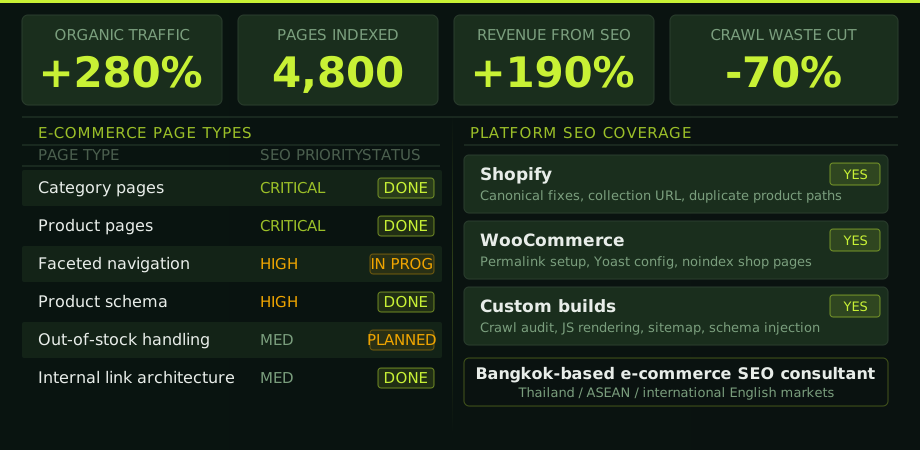
Most e-commerce SEO problems come from structure, not content.
The biggest issues on e-commerce sites are not missing blog posts or thin product descriptions. They are structural: filter pages creating thousands of near-duplicate URLs, category pages with no unique content, product pages competing with themselves across collection paths, and schema markup that is either missing or misconfigured.
These structural problems mean that even when good content exists, Google cannot assess it properly. The fix is technical first, then content. Get the architecture right, and the organic rankings follow. Skip the architecture, and content investment is partially wasted.
Our guide on e-commerce SEO fundamentals covers the most common issues in detail if you want the full breakdown before booking a call.
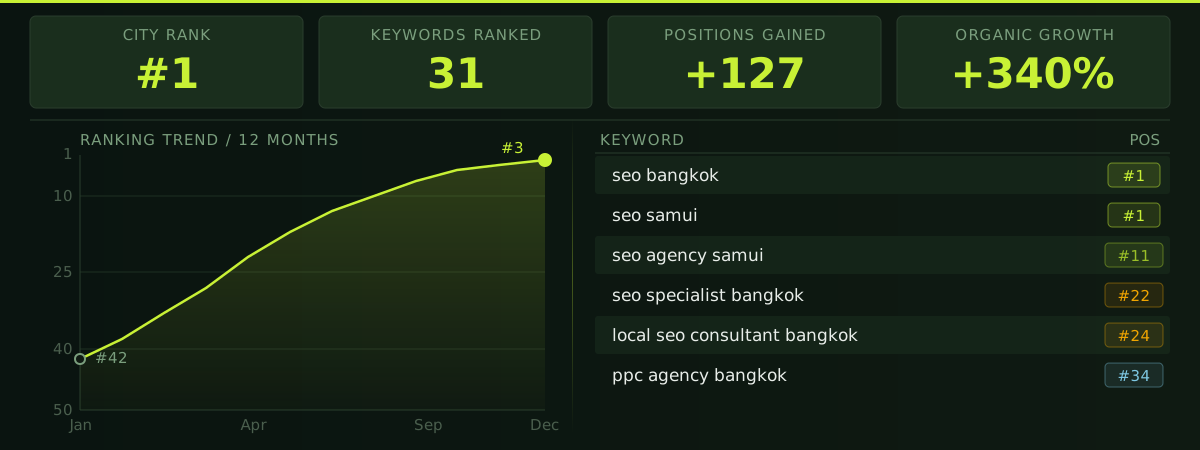
Google traffic converts at higher margins than Shopee or Lazada.
Marketplace platforms take a commission, control the relationship with the buyer, and compete with you using your own product listings. Organic search through your own site delivers buyers who are specifically looking for you, at no per-sale cost, with full control of the post-purchase relationship.
For most Thai e-commerce stores, the Google organic channel is underdeveloped and undercompeted. The businesses that invest in building it own a durable traffic source that compounds over time. The ones that depend only on marketplaces are renting their audience.
If you are still deciding whether to invest in SEO services or paid channels first, the SEO vs PPC guide covers that trade-off clearly.
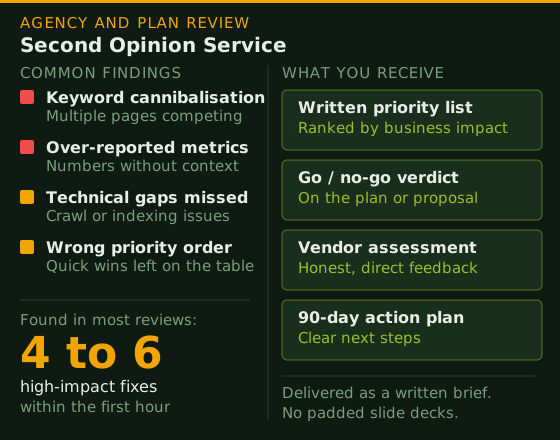
Every layer of e-commerce SEO, from crawl to conversion.
The work covers the six areas where e-commerce SEO either builds or breaks. The exact priorities depend on what the site audit finds first.
Category page architecture
Category pages are the most underused ranking opportunity on e-commerce sites. We optimise titles, H1s, unique category descriptions, internal linking from category to product, and the pagination handling that most platforms get wrong by default.
Product page optimisation
Unique product descriptions, schema markup, review integration, image optimisation, and URL structure. Specific attention to manufacturer description duplication, which affects most stores using supplier content without modification.
Faceted navigation and filter pages
Filter and attribute pages can create thousands of near-duplicate URLs that waste crawl budget and dilute rankings. We identify the correct approach for each site: noindex, canonical, parameter handling, or a combination, based on what the filter pages actually contain.
Platform-specific fixes
Shopify canonical problems with /collections/ URL duplication, trailing slash inconsistency, and .json endpoint indexation. WooCommerce permalink structure, shop page noindex, and Yoast or Rank Math configuration. Custom builds assessed against a full technical audit framework.
Schema markup and rich results
Product schema, Review and AggregateRating schema, BreadcrumbList, and FAQPage where applicable. Star ratings in organic results are one of the most visible CTR improvements available to e-commerce pages and require correct implementation to be eligible.
Out-of-stock and discontinued products
Handling permanently discontinued, temporarily unavailable, and seasonally out-of-stock products correctly is one of the most common sources of ranking loss on e-commerce sites. We define the right approach for each category: keep, redirect, or remove, with clear logic for each decision.
Built for the platforms Thai e-commerce actually runs on.
Every major e-commerce platform has its own SEO quirks. These are the three we work with most often.
Shopify
Canonical URL problems from /collections/ paths, trailing slash inconsistency, .json and sitemap endpoint management, app-induced bloat, and the specific configuration choices that prevent Shopify from creating its own ranking problems by default.
WooCommerce
Permalink structure setup, noindexing of shop and checkout pages, product and category schema configuration, Yoast or Rank Math setup for e-commerce, and the performance issues that WooCommerce introduces on shared hosting common in Thailand.
Custom builds
Full technical audit covering crawl path, JS rendering, sitemap quality, schema injection, and canonical tag implementation. Custom platforms vary significantly and the audit shapes the priority list rather than a standard template.
From 19 to 150 top-10 rankings.
An anonymous international wholesale e-commerce client increased tracked visibility from 2.31% to 32.36% between July 2025 and August 2026. The final export included 99 position-one rankings.