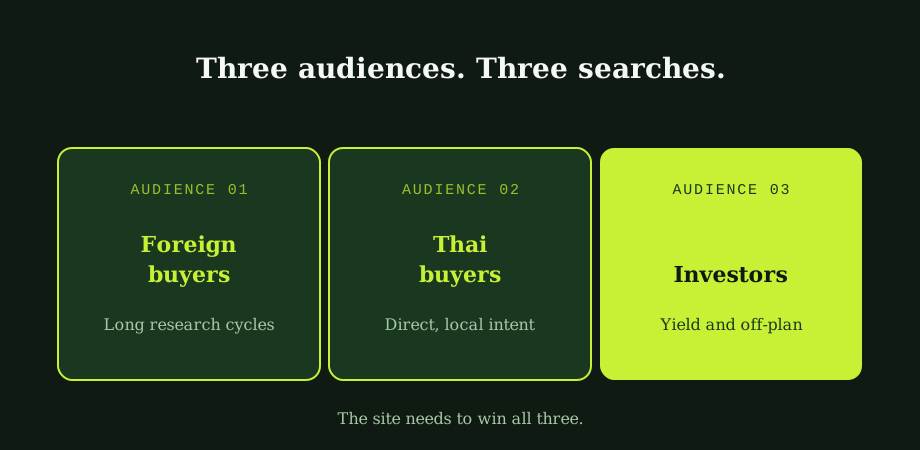
Thai property sells to several audiences. None of them search the same way. A foreign buyer planning to retire in Phuket or buy a villa on Koh Samui searches in English over six to twelve months and reads every guide they can find. A Thai professional looking for a Bangkok condo searches in Thai with sharper buying intent and a shorter cycle. An investor chasing yield in Pattaya wants different things: numbers, rental returns, developer track records. Each audience expects different content, in a different language, at a different stage.
On top of that, every search you care about is already crowded by property portals: DDProperty, FazWaz, Hipflat, Property Guru, and the rest. You will not out-list them. You can out-think them.
How real estate sites actually beat the portals
Portals are wide but shallow. Tens of thousands of listings, thin descriptions, generic content, no real expertise voice. That is their weakness, and it is where focused sites consistently outrank them.
- Go deep on a niche. A site that owns "Phuket beachfront villas" or "Hua Hin retirement homes" with deep expert content will outrank portals on those queries. The portal has more listings. You have more relevance.
- Answer the real questions. Buyers ask things portals never address. Foreign ownership rules. Leasehold versus freehold. Thai tax. A clear guide on each earns trust. A clear, accurate guide on each of these earns trust and links.
- Show what portals do not. Walk-through videos, original photos, neighbourhood context, floorplan analysis. Portals copy-paste developer materials. You can do better.
- Build authority around a name. A founder or an agency that publishes consistently and is quoted in property press becomes a brand buyers search for directly, which the portals cannot intercept.
The principle here is the same one in local SEO for Thailand businesses applied to a higher-stakes purchase: relevance, depth, and trust beat volume.
The long buyer journey
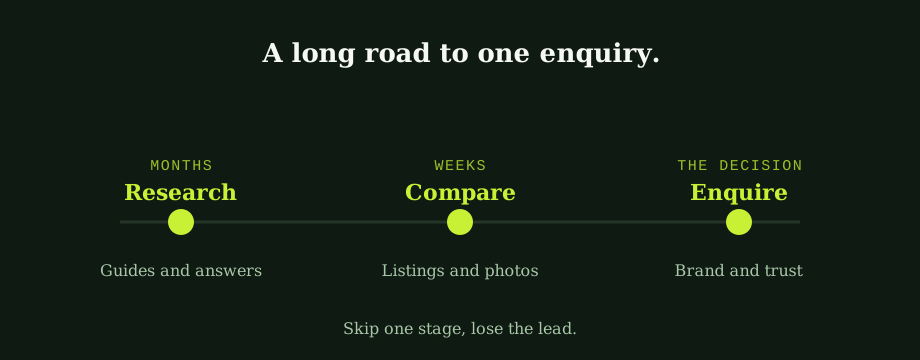
Unlike a hotel booking, a property purchase rarely happens on the first visit to a site. The journey typically runs in three phases:
- Research, often months. Buyers read guides, watch videos, compare neighbourhoods, learn the rules. They are not ready to enquire and they will resent being pushed. Your job here is to be useful, not pitchy.
- Compare, often weeks. A shortlist forms. Buyers look at specific listings, photos, floorplans, locations, prices, developer reputations. Listing depth and clarity decide who makes the cut.
- Enquire, often quickly once the decision is near. By this stage trust has been built or it has not. A buyer who has read your guides for months is far more likely to enquire with you than a portal listing.
SEO has to win at all three stages. A site that only sells listings will lose the research-stage audience. A site that only writes guides will lose the comparison-stage audience. Both halves are required.
The multilingual reality
Almost no serious Thai property site wins on a single language. The market splits roughly into:
- English for the broad international audience, expat owners, and remote investors.
- Thai for domestic buyers, who matter far more than many overseas operators assume.
- Chinese for the substantial mainland buyer base that has shaped Phuket, Pattaya, and Bangkok condo demand for years.
- Russian for several resort markets, despite political and travel disruption.
Each language needs its own properly localised URLs, content, and hreflang signals, not an auto-translated overlay. More on that in Thai-English SEO for both languages, See also SEO for Thai businesses targeting foreign customers on the foreign-buyer angle.
What property sites usually get wrong
- Treating every page like a sales page. Research-stage buyers want answers, not pitches. Pushy listing pages at the top of the funnel just lose people.
- Auto-translated language versions. Machine-translated Chinese or Russian pages read like a scam to native readers and rank for nothing.
- Thin or duplicated listing content. Hundreds of listings using identical boilerplate beneath the photos. Each one is invisible to search.
- No author or expert voice. Property buyers want to know who is telling them this. Anonymous corporate copy underperforms a clearly attributed expert on every metric that matters.
- Ignoring trust signals. Reviews, accreditations, agency licences, developer track records. The bigger the purchase, the more buyers want to see proof.
How to start
Order matters more than effort. Pick your niche before you write anything, because trying to be the authority on all Thai property at once produces vague content that ranks nowhere. Then write the five or ten guides every buyer in that niche actually needs, in proper localised versions where it matters. Then layer the listing architecture on top. Trying to do listings first and content later is how most real estate SEO projects stall.
Property businesses come to us with the same problem: leads going to portals instead of their own site. The fix is almost always the long buyer journey above, executed in the right languages with the right authority. That is what serious Bangkok SEO work looks like when the goal is enquiries, not impressions. Our SEO agency in Thailand works with property developers and agencies on authority-building content, listing architecture, and multilingual SEO. A second pair of eyes from a working SEO consultant in Bangkok usually finds the one or two levers that move the needle first.
Common questions
Why is SEO important for real estate in Thailand?
Because Thai property is a long, research-heavy purchase that buyers make across many sites and many months, mostly without ever picking up the phone until they are close to a decision. The companies that capture those buyers show up at every stage of the journey. Early research queries, comparison searches on specific areas, and direct enquiries on a development each need to find you. Paid ads can work for the bottom of the funnel, but they are expensive and stop when the budget stops. SEO compounds. A real estate site that earns visibility through useful content and good technical health continues to generate enquiries month after month.
How do real estate sites compete with property portals?
Not on listing volume, that is a losing battle. Portals like DDProperty, FazWaz, and Hipflat aggregate tens of thousands of listings and spend heavily on SEO and ads. A single developer or agency will never outpost them. The way smaller sites win is by going where portals are weak. Portals are wide but shallow: thin descriptions, generic content, no real expertise voice. A specialist site that publishes genuinely useful guides, answers real buyer questions with depth, shows photos and floorplans the portals do not have, and builds authority around a niche, like Phuket beachfront villas or Bangkok off-plan investments, can rank above portals for high-intent queries.
What schema markup should property listings use?
For individual listings, the most useful schema is the appropriate property type from Schema.org, such as House, Apartment, or SingleFamilyResidence, often paired with RealEstateListing as the listing wrapper. Include the price, location, number of bedrooms and bathrooms, floor area, and clear photos in the structured data so Google understands what is being offered. For developments, organisational and breadcrumb schema helps Google understand site structure. Do not add schema that does not reflect the visible page content, that is the fastest way to get a manual action against a real estate site. Schema is a clarifying signal, not a way to claim properties or features that are not actually on the listing.
Which languages should a Thai property site target?
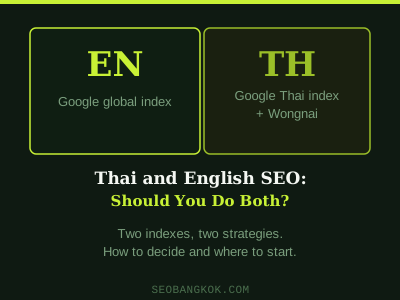
It depends on the buyer mix, but for most serious properties in Thailand the realistic answer is at least English and Thai, with Chinese and Russian added for many resort and investment-grade properties. English is the baseline for the international expat and remote-buyer audience. Thai is essential for domestic buyers, who are a much larger share of the market than overseas operators sometimes assume. Chinese serves the substantial mainland China investor and lifestyle buyer audience that has been a significant force in Phuket, Pattaya, and Bangkok condos for years. Russian remains important for several resort markets despite political and travel disruption.
Island property is its own market, with buyers researching from abroad months ahead and a separate local rental audience running on completely different searches. Our Phuket local SEO page sets out how the two are handled together.