Start with the pages that can bring the traffic
Most store owners spend too much time on individual product pages and not enough on category pages. That is usually backwards. Category pages are often the pages that rank for bigger commercial searches like "gold hoop earrings", "office chairs", or "protein powder". Product pages matter, but category pages usually do the heavy lifting at the traffic stage.
A strong category page needs a clear H1, a clean URL, a useful intro, a good product selection, and internal links that help Google understand how the store is structured. If your categories are thin, messy, or duplicated, the rest of the SEO work has a weak base.
- Use names real people search for. Category titles should match how customers search, not internal brand language.
- Add a short useful intro. A few strong paragraphs are enough. It does not need to be long. It does need to help.
- Keep product selection clean. Empty or weak categories rarely rank well.
- Link related categories together. This helps users browse and helps search engines understand the structure of the store.

Product pages still matter, but for a different job
Product pages usually do more of the conversion work. Someone lands there when they are closer to buying, so the page needs to help them decide fast. Good product SEO is really a mix of search clarity and conversion clarity.
- Write your own product copy. Manufacturer text is usually weak and duplicated across many other sites.
- Use strong titles and product details. Size, material, color, use case, and compatibility all matter.
- Add product schema. Price, availability, reviews, and ratings help search engines understand the page.
- Show related products. This helps shoppers and creates useful internal links.
- Handle out-of-stock pages properly. See handling out-of-stock and discontinued products. Do not kill pages that still have search demand or backlinks.
Where your store has hundreds or thousands of product pages, this is where process matters. Fix the template first. Then improve the important pages in priority order. Trying to rewrite everything at once is how stores waste months.
Filters can help users and still wreck your SEO
Filters are one of the biggest problems in e-commerce SEO. They are useful for shoppers, but they can create huge numbers of duplicate or near-duplicate URLs. That leads to crawl waste, index bloat, and pages competing against each other.
The simple rule is this: only a small number of filtered pages should be indexable. Those should be the ones that match real search demand. Everything else should usually be controlled with canonicals, noindex, or crawl rules.
- Find the filter combinations people actually search for.
- Keep those pages clean, indexable, and internally linked.
- Stop the rest from turning into thousands of low-value pages.

Technical cleanup is not optional on a big store
On a small site, technical mistakes are annoying. On a big store, they become expensive. Broken canonicals, duplicate pages, bad pagination, slow templates, weak internal linking, and index bloat can quietly cap the whole site.
This is why on-page and technical SEO matter so much for e-commerce. Before chasing more backlinks or more content, make sure the store can actually be crawled, understood, and indexed properly.
- Check crawl waste. Search engines should spend time on money pages, not junk URLs.
- Fix speed problems on templates. Product and category templates affect the whole site.
- Use internal links with purpose. Push authority to your main commercial pages.
- Keep structured data clean. Product, breadcrumb, and review schema should be valid and useful.
Speed matters because it affects both rankings and sales
Slow stores lose people. That is true whether the visit comes from SEO, PPC, email, or direct traffic. Speed is not just an SEO metric. It is part of conversion rate.
Start with the basics: compress images, reduce script bloat, fix layout shift, and clean up third-party tools that do not earn their place. Fancy dashboards are less important than a store that loads fast enough for people to keep shopping.
SEO and PPC work well together in e-commerce
E-commerce is one of the best cases for using PPC and SEO together. PPC gives you fast data on what people click and what actually sells. SEO helps you build long-term traffic around those same products, categories, and search terms.
When you are still working out your priorities, our guide on SEO vs PPC breaks down when each channel makes sense and how they support each other.
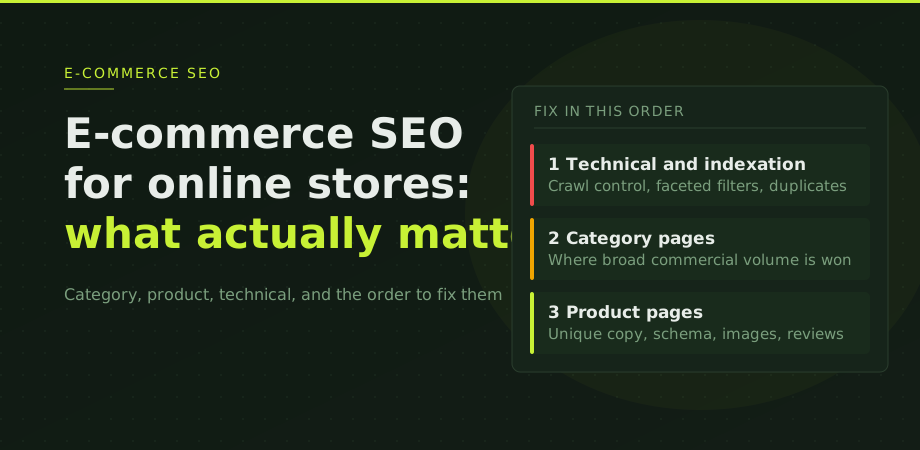
For most online stores, the right order is simple: fix category structure, clean up technical problems, improve product pages, then build authority on top of that.
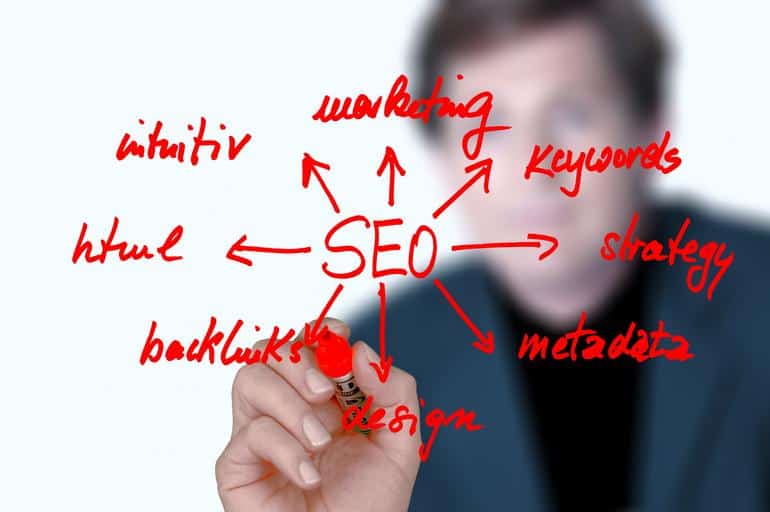
When you run an online store and want a clear fix list, our e-commerce SEO consultant in Bangkok covers the technical side, content structure, internal linking, and growth priorities from end to end. If you are still new to the topic, start with what SEO is and why it matters.
Common e-commerce SEO questions
Should I focus on category pages or product pages first?
Are filters bad for SEO?
Do I need unique product descriptions?
Can PPC help my e-commerce SEO work?
For a worked example, our e-commerce case study tracks a wholesale catalogue moving from 2.31% to 32.36% tracked visibility across 338 monitored queries.