Most SEO advice is written with B2C in mind. Chase high-volume keywords, get lots of traffic, drive direct sales. For a shop selling to consumers, that works. For a business selling to other businesses, it can quietly fail. You can rank well, get traffic, and still close no deals.
The reason is simple. The B2B buyer is a different animal. The SaaS-specific extension of this framework lives in SEO for IT and SaaS businesses in Bangkok. The sale is bigger, slower, and decided by a group. Once you understand that, the right SEO strategy becomes clear. Let us walk through the differences and what to do about them.
The four core differences
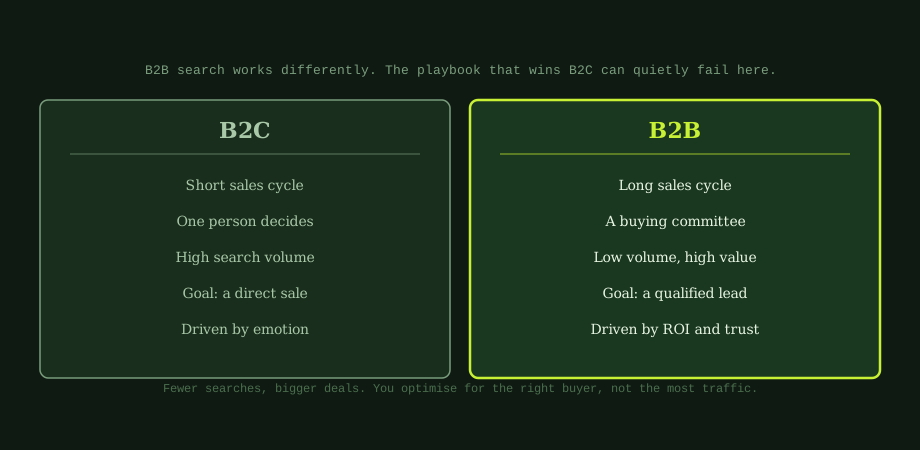
Four things set B2B apart from B2C, and each one changes your SEO.
- The sales cycle is long. A B2C purchase can take minutes. A B2B deal often takes weeks or months of research and approval.
- Several people decide. B2C usually has one buyer. B2B has a buying committee: a user, a manager, a finance approver, sometimes more.
- Search volume is low. The B2B market is smaller, so the keywords get fewer searches. But each deal is worth far more.
- The goal is a lead, not a sale. B2B SEO rarely drives an instant purchase. It drives an enquiry that starts a longer conversation.
Hold these in mind, because every focus area below follows from them.
Why low search volume is not a problem
This trips up a lot of people. A B2B keyword might be searched only 50 times a month. In B2C terms, that looks tiny and not worth targeting. In B2B, it can be gold.
Here is why. If those 50 searches come from real buyers, and one becomes a client worth tens of thousands over the relationship, that keyword has paid for itself many times over. Compare that to a high-volume B2C term that brings 50,000 visitors who each spend a little, or nothing.
So in B2B, you judge a keyword by who is searching and how close they are to buying, not by volume. A few of the right visitors beat a flood of the wrong ones. This is the same intent-first thinking we use in keyword research without expensive tools.
What B2B SEO should focus on
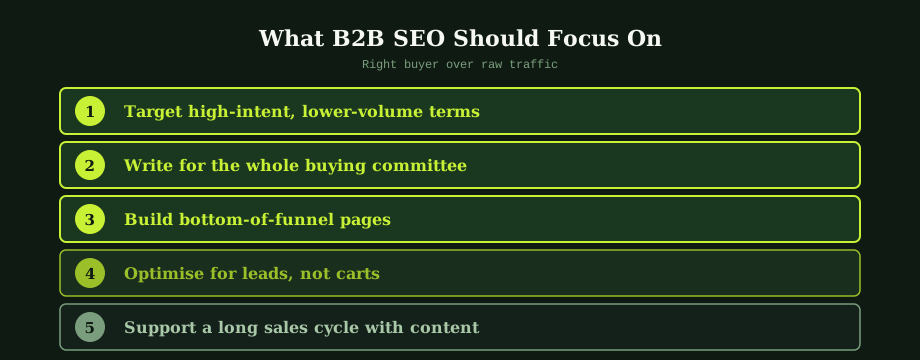
Here is where to put your effort.
1. Target high-intent, lower-volume terms
Go after the specific terms a real buyer uses when they are close to deciding. Think "wholesale jewelry manufacturer Thailand" rather than "jewelry." These terms have low volume and high value. They are also less contested, so you can rank faster. The wholesale and manufacturer example is more on that in SEO for jewelry brands and manufacturers in Thailand.
2. Write for the whole buying committee
Remember that several people weigh in. Each cares about something different:
- The user wants to know it works and is easy to use.
- The manager wants results and reliability.
- The finance approver wants the cost and the return.
Good B2B content answers all of these. A single page that only sells to one of them leaves the others unconvinced, and any one of them can stall the deal.
3. Build bottom-of-funnel pages
These are the pages buyers visit when they are close to deciding: comparison pages, alternative pages, pricing and process pages, and case studies. They get less traffic than blog posts but convert far better, because the people reading them are ready to act. Many B2B sites have plenty of top-of-funnel blog content and almost nothing for the buyer at the end. Fill that gap.
4. Optimise for leads, not carts
B2B rarely ends in a checkout. It ends in an enquiry, a demo request, or a quote. So your pages need clear, low-friction ways to start that conversation: a simple contact form, a clear call to action, an easy way to ask for a quote. The conversion you are optimising for is the qualified lead, which connects to conversion rate optimisation.
5. Support the long sales cycle with content
Because the decision takes months, your content needs to be useful at every stage. Early on, helpful guides build trust. In the middle, comparisons and proof help evaluation. Late, pricing and case studies close the gap. Map your content to the journey, so a buyer always finds the right thing for where they are.
Trust matters even more in B2B
A B2C buyer risks a small amount on an impulse purchase. A B2B buyer risks budget, reputation, and sometimes their job on a big decision. So trust carries more weight, and your SEO needs to build it.
That means strong proof: case studies, real results, named expertise, and a credible, professional site. It means showing who you are and why you can be trusted, the same E-E-A-T signals that help you rank. In B2B, a buyer choosing between two similar firms will pick the one that feels safer. Your content and authority decide which one that is.
The payoff
B2B SEO can feel slow. The volumes are small, the cycle is long, and results take patience. But the maths is compelling. A handful of qualified leads from search, each worth a large, long-term contract, can outperform almost any other channel on return.
The key is to stop measuring B2B SEO by B2C yardsticks. Do not chase traffic. Chase the right buyer, at the right moment, with the right content. That is what wins B2B search.
B2B SEO is often sold as "just SEO with longer sales cycles". That undersells the difference. Buyer panels, multi-month research phases, content built for procurement and legal teams, all change the programme. Our SEO strategy consulting and SEO consulting are built for exactly that work. As a Bangkok SEO partner, we work with B2B teams whose buyers do not behave like consumers.
Common questions
How is B2B SEO different from B2C SEO?
The fundamentals are the same, but the strategy differs because the buyer behaves differently. B2B has a longer sales cycle, often months, with several people involved in the decision rather than one. Search volumes are lower because the market is smaller, but each deal is worth far more. The goal is usually a qualified lead, not an instant sale, and decisions are driven by return on investment and trust rather than impulse. So B2B SEO optimises for reaching the right buyer at each stage of a long decision, not for the most traffic.
Does keyword volume matter less in B2B SEO?
Yes, in a sense. B2B keywords often have low search volume because the audience is small and specific. A term searched only 50 times a month can be far more valuable than one searched 50,000 times if those 50 searches come from genuine buyers. So B2B SEO weighs intent and value over raw volume. The mistake is dismissing a keyword because the volume looks small. In B2B, a handful of the right visitors who become leads can be worth more than thousands of the wrong ones.
What content works best for B2B SEO?
Content that serves a long, considered decision made by several people. This includes detailed guides that build trust early, comparison and alternative pages for buyers evaluating options, case studies and proof for the people who need evidence, and clear pages on pricing, process, and return on investment for the decision-makers. Because a buying committee often includes both technical and business stakeholders, useful B2B content speaks to different concerns: the practical how, the financial why, and the risk of getting it wrong.
Is B2B SEO worth it given the low search volumes?
Often more so than B2C, because the value per deal is so much higher. A single B2B client can be worth thousands or tens of thousands over the relationship, so even a small number of qualified leads from search can deliver a strong return. The low volumes mean you do not need a flood of traffic; you need the right buyers to find you at the moment they are evaluating options. Done well, B2B SEO targets exactly those moments. For businesses with high-value clients and long relationships, it is one of the most cost-effective channels available.