Before the tactics, the principle: a link is a vote. Google still treats editorial backlinks, the ones a real person chose to add because the content deserved it, as one of the clearest signals that other sites trust yours. Anything that imitates that signal without genuinely earning it either fails to move the needle or eventually triggers a penalty.
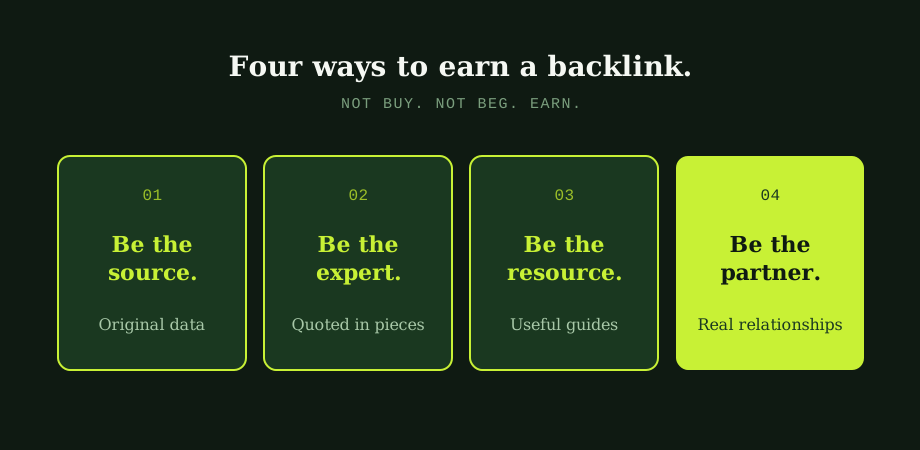
So the question is not "how do I get links" but "how do I become worth linking to." Here are four answers that consistently work.
1. Be the source
Publish something nobody else has. Original data, a survey of your industry, a small study of your own customers, even a clear analysis of public numbers. Journalists and writers need fresh material to cite. If you are the easiest credible source for a stat in your niche, you become a magnet for citations, and citations are links.
This does not need to be huge research. A single-page report with one clear chart, properly attributed, is enough to start picking up references from industry sites and news pieces.
2. Be the expert
Quotes in other people's articles are one of the most efficient ways to earn editorial links. Subscribe to journalist request services and watch for relevant queries in your area. Reply with short, specific, useful commentary, the kind that fits into an article without editing. Over time, a reputation for being quotable produces a steady drip of links from publications you would never reach by pitching cold.
The bar is not fame, it is usefulness. A clear three-sentence answer to a niche question beats a 500-word essay every time.
3. Be the resource
The simplest link magnet is a genuinely useful free resource: a deep guide, a working checklist, a tool that saves people time. If your page is the best answer to a specific question, other people writing about that question will reach for it, because it makes their content stronger to link to a better one elsewhere.
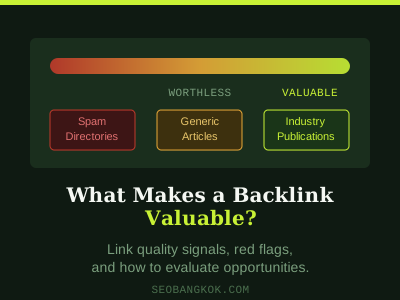
For the difference between this and just "more content," look at what makes a backlink valuable. Useful resources earn links because they serve someone else's audience, not because they look optimised.
4. Be the partner
Real-world relationships still earn some of the best links. Suppliers, customers, distributors, industry associations, community organisations, charities, and events all run sites that mention the businesses they work with. Case studies, partner pages, testimonials, sponsorships, and "featured customer" posts are all natural places for genuine, contextual links. The companion piece on how the resulting anchor text should look is in anchor text best practices for SEO.
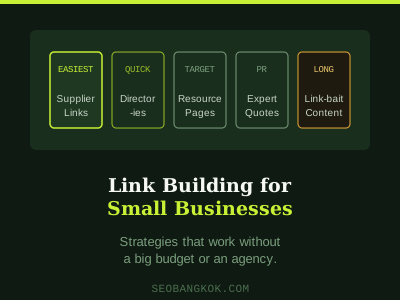
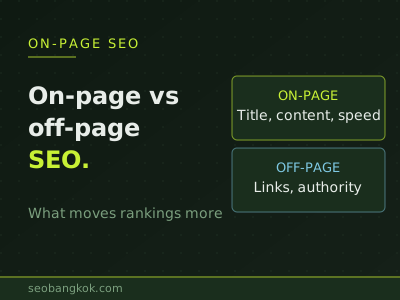
None of this is a trick. It is simply being a real business that other real businesses talk about. The principle behind it sits at the heart of on-page versus off-page SEO, and a focused, small-business version is in link building for small businesses.
The rhythm: make, pitch, wait
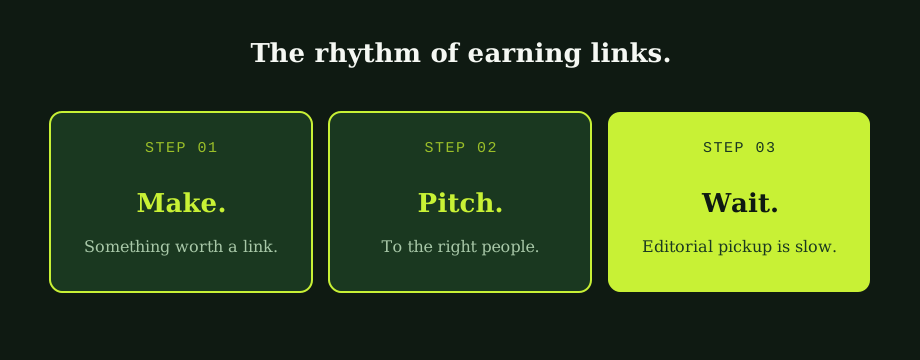
Any of those four tactics follows the same beat. Make the thing worth linking to. Pitch it to the right people: relevant journalists, editors, partners, communities. Wait, because editorial pickup is slow and uneven. Sites do not link the day you publish. Patience is part of the work; if you only run a campaign for a month and quit, you will conclude link building does not work, when really you stopped just before it started to.
What to avoid
The shortcuts that lose people money:
- Buying links from networks or marketplaces. Caught more often than they used to be, devalued silently when not caught, occasionally penalised harshly when they are.
- Spammy comments and forum signatures. Either ignored by Google or noted as low-quality signals.
- Mass guest-posting on irrelevant sites. The pattern is obvious, and the links do nothing because the placement is not editorial.
- Private blog networks. The classic black-hat shortcut. The risk of a penalty is real and the cleanup cost is high.
The honest path is slower and less exciting. It also works, and it stops working only if you stop doing it. If you want the best SEO in Bangkok for your budget, treat link building as a long campaign of value and relationships, not a monthly invoice for "20 links."
Most businesses chase link-building shortcuts and lose. The few who treat it as a long, honest campaign of value and relationships compound their visibility for years. Our SEO services in Thailand include link earning as part of that wider strategy, scoped properly and paced slowly. A short audit from an SEO consultant in Bangkok usually turns up the two or three real link assets a site already has but is failing to pitch.
Common questions
What is the best way to get backlinks?
The best way to get backlinks is to deserve them. Publish something useful enough that other sites genuinely want to reference it, then tell the right people it exists. That sounds slow because it is, but the alternative is paid or low-quality links that either fail to move rankings or actively risk a Google penalty. Practical methods include original data or research that gives journalists something fresh to cite, expert commentary in your area of work, deeply useful free resources that solve a real problem for your audience, and real partnerships with suppliers, customers, and community organisations. None of these are quick tricks. All of them produce links that hold up over time and that Google treats as real votes of confidence.
Should I buy backlinks?
No. Buying links violates Google's guidelines and the risk is not theoretical. Paid links from low-quality networks are routinely caught and devalued, and at worst trigger a manual action that can wipe out rankings overnight. Even when paid links seem to work in the short term, they tend to come from sites with no real audience and no editorial standards, so they do not pass meaningful authority. The damage from cleaning up a bad link profile can cost far more than you save by buying links in the first place. The exception people quote, sponsored content marked with nofollow or sponsored attributes, is a paid placement that does not pass link equity and is not really link building.
How long does it take for new backlinks to affect rankings?
Anywhere from a few weeks to several months, and sometimes never if the links are not seen as editorial. Google has to discover the link, decide whether the linking site is trustworthy, and reassess the target page's authority, which is not instant. For high-quality editorial links from relevant sites, the lift usually appears over the following weeks and compounds as you earn more. For low-quality links, the change is often nothing, or a quiet devaluation rather than a boost. Patience matters here. Link building is one of the slowest parts of SEO, which is also why it works as a moat.
What makes a backlink high quality?
Three things, mainly. Relevance: the linking site covers a topic close to yours, so the link makes editorial sense. Editorial intent: a real writer or editor chose to include the link because the content earned it, not because someone paid for placement. Context: the link sits inside genuinely useful content surrounded by relevant text, not buried in a footer or a sidebar list. A link from a small but highly relevant industry publication usually outperforms a link from a huge but unrelated site, because it tells Google something specific about your authority in your field.