
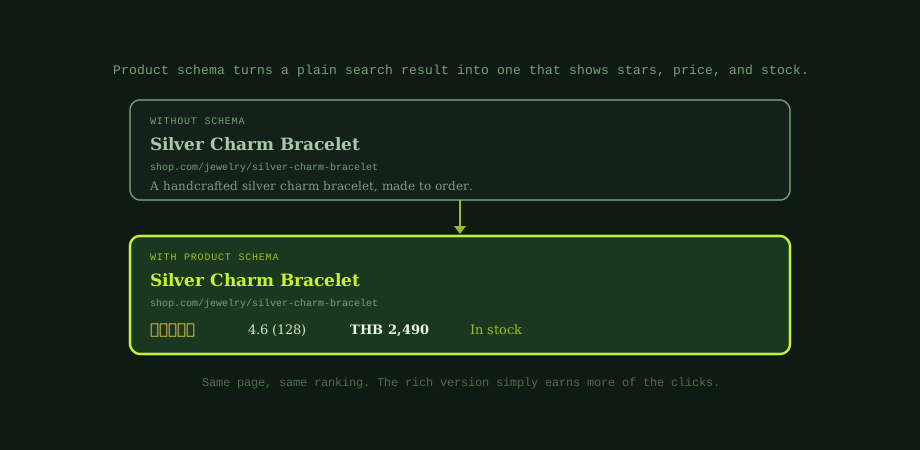
When two product listings sit side by side in search, and one shows a four-and-a-half star rating, a price, and in-stock, while the other is a plain link, which gets the click? The rich one, almost every time. That richer listing is powered by product schema.
This guide assumes you know the basics of structured data. If not, start with what structured data is and why you should add it, then come back. Here we focus specifically on product and review markup for online shops.
What product schema does
Product schema is structured data that describes a product to search engines: its name, price, currency, availability, brand, images, and ratings. When search engines read it, your page becomes eligible for a rich result that can display some of those details right in the listing.
The key word is eligible. Adding valid schema does not guarantee rich results; search engines decide when to show them. But without the markup, you are not even in the running. And to be clear about the benefit: this does not lift your ranking. It makes the listing you already have more attractive, which lifts your click-through rate. More clicks from the same position is the whole point.
What it can show
Done well, product and review schema can surface several eye-catching details in search:
- Star rating and review count. The gold stars that draw the eye, from your aggregate rating.
- Price and currency. So shoppers see the cost before clicking.
- Availability. In stock, out of stock, or pre-order.
- Other details. Such as brand, sometimes shown depending on the result.
For a shop, this is the difference between blending in and standing out among a row of similar products. It is one of the highest-value additions on a product page, alongside strong, fast images.
The six rules for getting it right
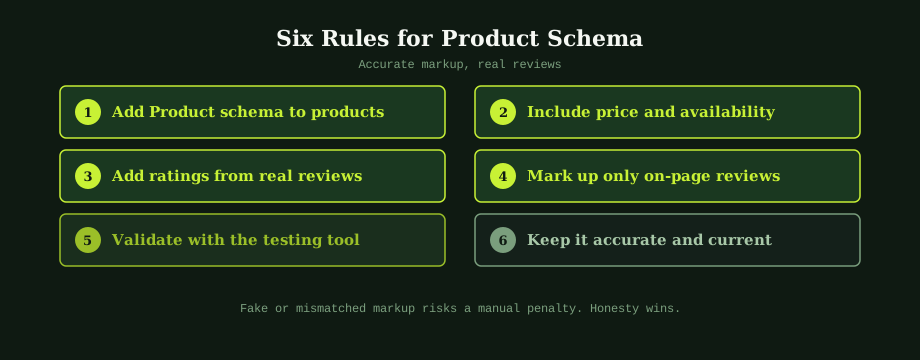
1. Add Product schema to product pages
Each product page should carry product structured data describing that specific item. Most e-commerce platforms add basic product schema automatically; the job is often to check it is present and complete rather than to write it from scratch.
2. Include price and availability
State the price, the currency, and the stock status. These are the details shoppers most want to see in a listing, and they help qualify the click. Keep them accurate, since a wrong price shown in search is worse than none.
3. Add ratings from real reviews
The star rating comes from an aggregate rating: the average score and the number of reviews. This must be based on genuine reviews that actually appear on the page. Collecting and displaying real customer reviews is what unlocks the stars honestly.
4. Mark up only on-page reviews
You may only mark up reviews that are genuinely visible on the page. Adding rating markup for reviews that do not exist, or are not shown, breaks the guidelines. This is the rule people most often get wrong, and it is the one that gets sites penalised.
5. Validate with the testing tool
Before trusting your markup, run the page through a rich results testing tool. It tells you whether the schema is valid and which rich results the page is eligible for, and it flags errors to fix. Always validate after making changes.
6. Keep it accurate and current
Your markup must match your page. If the price changes, the schema updates too. Mismatches between what your schema says and what the page shows can cost you rich results and trust. Automation through your platform is the most reliable way to keep them in sync.
The big warning: never fake it
This deserves its own section because the temptation is real and the cost is high. Do not invent ratings. Do not mark up reviews that are not on the page. Do not add self-serving review markup the guidelines prohibit.
Search engines actively check this, and fake or mismatched review markup can trigger a manual penalty that strips your rich results, sometimes across the whole site. The honest path is also the durable one: gather real reviews, show them on your pages, and mark up the genuine rating they produce. Stars earned this way last; faked ones are a liability.
How this fits your e-commerce SEO
Product schema is one layer of a strong product page. It works best on pages that are already solid: good content, clear images, helpful information, and the on-page essentials in product page SEO. Schema makes a good page more clickable; it cannot rescue a weak one. Together with the rest of your e-commerce SEO fundamentals, it helps your products stand out and earn more of the clicks they deserve.
Schema work is the kind of boring infrastructure that compounds: set it up once, validate it, monitor it, let it work. Our ecommerce SEO services handles product and review markup across catalogues of any size. An SEO expert in Bangkok can audit current markup, fix anything invalid or risky, and put a safe review strategy in place.
Common questions
What is product schema?
Product schema is structured data you add to a product page to describe it in a format search engines understand. It labels details like the product name, price, currency, availability, brand, images, and any ratings or reviews. When search engines read this markup, your page becomes eligible for a richer result, one that can show a star rating, the price, and whether the item is in stock, directly in the search listing. This makes your result stand out and tends to attract more clicks than a plain link. Product schema does not change your ranking by itself, but the richer, more eye-catching result it can unlock often improves your click-through rate, which brings more traffic from the same position.
How do I add review stars to search results?
Review stars in search come from review or rating structured data, usually the aggregateRating property within product schema. To show them, you add markup that states the average rating and the number of reviews, based on real reviews shown on the page. When this is valid and matches the visible content, your result becomes eligible to display the star rating. It is important to understand eligible does not mean guaranteed; search engines decide when to show rich results. The two requirements are that the markup is technically correct and that it reflects genuine reviews actually present on the page. Faking ratings or marking up reviews that are not visible breaks the rules and can lead to a penalty.
Can fake review schema get me penalised?
Yes. Adding rating or review markup for reviews that do not genuinely exist, or that are not visible on the page, violates search engine guidelines and can result in a manual action that removes your rich results, or worse. The same applies to marking up self-serving reviews in ways the guidelines prohibit. Structured data must reflect what is actually on the page. The safe and effective approach is to collect real reviews, display them on your product pages, and mark up the genuine aggregate rating they produce. This earns you rich results honestly and durably. Trying to fake your way to stars is a short-term trick that risks long-term damage to your visibility.
Do rich results improve rankings?
Rich results do not directly raise your ranking position. Structured data is not a ranking factor in the sense of pushing you higher up the page. What rich results do is make your existing listing more attractive, with stars, price, and availability that catch the eye. That tends to increase your click-through rate, so you get more visitors from the position you already hold. A higher click-through rate can also be a positive signal over time. So the benefit is real but indirect: schema makes you more clickable rather than higher ranked. For e-commerce, where standing out among similar product listings matters, that extra clickability is well worth having.