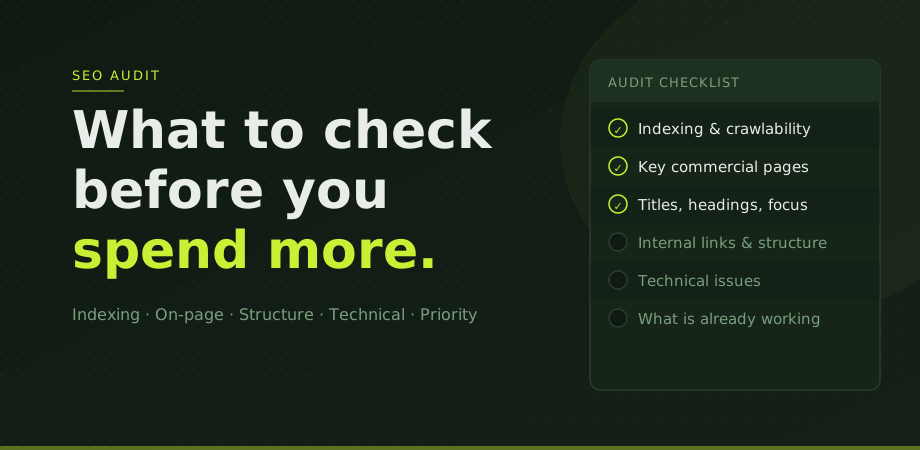
An SEO audit is not supposed to be a 70-page PDF full of random warnings. The real job is much simpler: figure out what is stopping the site from performing better, what matters most, and what should be fixed first.
That matters because many businesses spend money on the wrong things. They publish new content when the important pages are not indexed. They buy links when the site structure is weak. They redesign pages that already work while ignoring the technical issues that hold the whole site back.
Where you are still building the basics, start with what SEO is and why it still matters. If you already know SEO matters and want to know where the problems usually hide, this is the checklist to use.
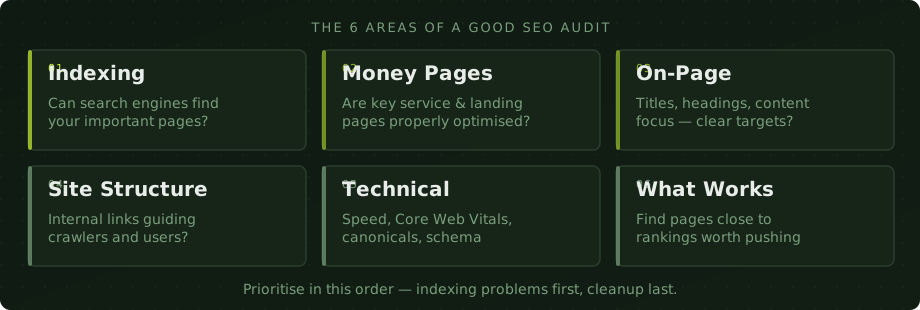
Start with indexing and crawlability
Before anything else, make sure search engines can actually access and index the pages that matter.
- Are the important pages indexed?
- Are any key pages blocked by robots.txt, noindex tags, canonicals, or bad redirects?
- Are there duplicate versions of the same URLs?
- Does Google seem to be spending time crawling low-value pages instead of commercial ones?
This is the first thing to check because if the right pages are not in the index, content and link work will have limited effect.
Check the pages that are supposed to make money
Not every page matters equally. Start with the pages that are closest to leads, sales, or high-intent traffic.
Look at:
- service pages
- category pages
- key landing pages
- your top product or conversion pages
Ask simple questions:
- Does each page clearly target a real search topic?
- Does the page match what the searcher wants?
- Is the content strong enough to compete?
- Is the page easy to use on mobile?
This is where many audits go wrong. They spend too much time on low-value pages and not enough on the pages that affect revenue.
Review titles, headings, and page focus
Some pages fail because they never had a clear target to begin with. They try to rank for too many things at once or they say almost nothing useful.
Check for:
- missing or duplicated title tags
- weak page titles that do not match search intent
- headings that are vague or repeated
- thin content on important pages
- pages targeting the same topic and competing with each other
When you want a clearer view of how content and authority work together, this on-page vs off-page guide breaks that down in plain English. If your site targets multiple countries, pair this audit with our guide on what changes in international SEO.
Check internal linking and site structure
A lot of sites have decent pages buried under weak structure. Important pages get very few internal links, while low-value pages absorb most of the site’s authority.
Look at:
- whether key pages are linked from navigation, hubs, or related pages
- whether anchor text is clear and helpful
- whether related pages connect logically
- whether the site structure makes it easy for both users and crawlers to move through the site
Bad internal linking is one of the easiest SEO problems to fix, and one of the most common things audits uncover.
Look at technical issues that actually matter
Not every technical warning is urgent. The goal is not to fix every tiny issue. The goal is to find the ones that affect search visibility or user experience in a real way.
Usually that means checking:
- page speed and Core Web Vitals
- mobile usability
- broken links and broken images
- redirect chains
- canonical problems
- XML sitemap quality
- schema on key pages
If a site is large, technical debt tends to stack up fast. If a site is growing across multiple markets, it gets even more important. That is one reason international SEO usually needs a stronger technical base.
Check what is already working
A good audit is not only about problems. You also want to find the pages, keywords, and sections that are already performing well.
Look for:
- pages that rank but could move higher with better internal links or stronger content
- queries where you are already on page two
- pages with strong click-through rates
- blog posts or guides that could support service pages better
Often the best wins do not come from building something new. They come from improving something that is already close.
Check if SEO and PPC are working together
If the business runs ads, your audit should look at that too. PPC data often shows which terms actually convert, and that can help you decide where SEO should focus.
For example:
- high-converting paid keywords may deserve stronger SEO landing pages
- good organic pages may become strong PPC landing pages
- paid search can help test demand before you build content at scale
If that part is not clear yet, read SEO vs PPC. The two channels usually work better together than apart.
Turn the audit into a priority list
The final output of a good audit should not be a giant list of everything that might be improved someday. It should be a clear priority order.
A simple way to frame it:
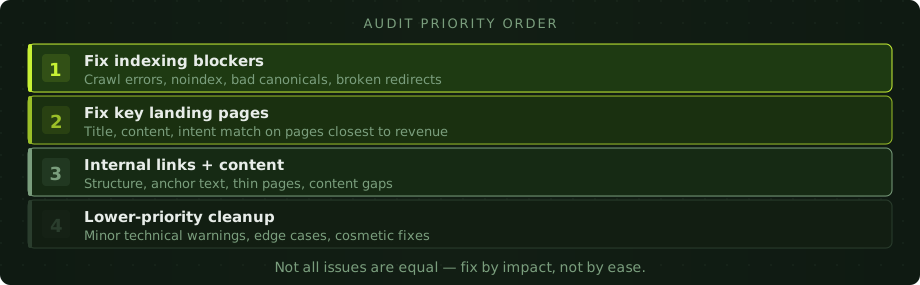
- Fix what blocks indexing, crawling, or major conversion pages.
- Fix what weakens your most important landing pages.
- Improve internal linking and content gaps.
- Handle lower-priority clean-up later.
This is where many teams waste time. They treat all issues as equal. They are not.
A good SEO audit does not give you more noise. It gives you a clear order of what to fix first.
Want a proper audit with evidence, priorities and clear next steps? Review our SEO audit services in Thailand or use the checklist above for an internal first pass.
Common SEO audit questions
How often should you run an SEO audit?
At least once or twice a year for most sites. You should also do one before a redesign, migration, or major content push.
Can I do a basic SEO audit myself?
Yes. You can spot a lot on your own, especially on smaller sites. Bigger sites usually still need a deeper technical review.
What is the first thing to check?
Start with indexing and crawlability. If search engines cannot properly access the right pages, everything else matters less.
Does every SEO issue need to be fixed right away?
No. The point is to identify what matters most. Some issues can wait. Some are costing you visibility or leads right now.