
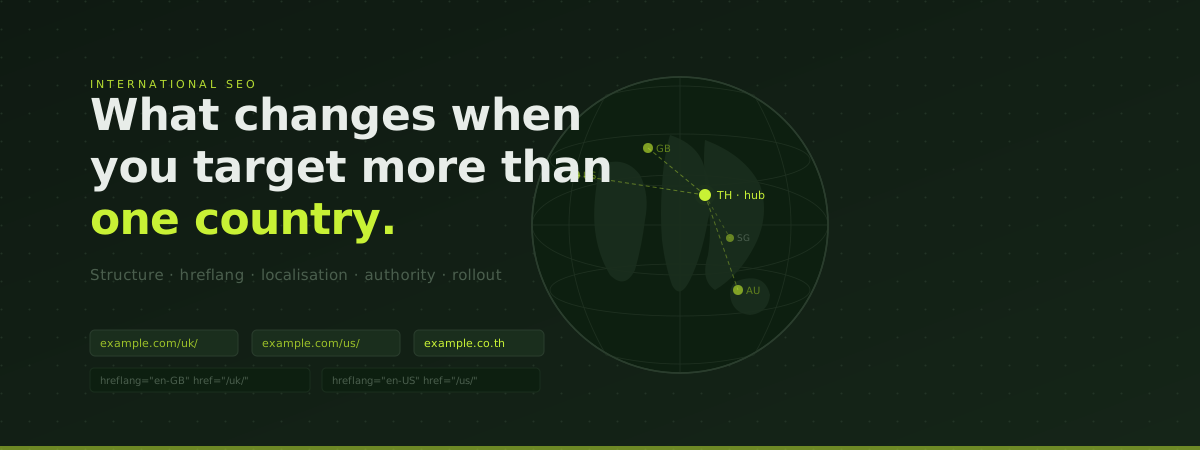
Where your business sells in more than one country, normal SEO rules are still important, but they are no longer enough. You are not just trying to rank one site. You are trying to make sure Google understands which page belongs to which market, which users should see which version, and how your country sections connect to each other.
This is where many businesses go wrong. They launch a new country folder, copy some content, maybe translate a few pages, and assume Google will sort it out. Sometimes it does. A lot of the time it does not. You end up with the UK page ranking in Australia, the US page outranking the local version in Canada, or one strong market cannibalizing the rest.
Being still working on the basics means start with what SEO is and why it still matters. Once those fundamentals are in place, this is what changes when you go international.
The goal is not just more traffic
International SEO is not about adding countries to a map and hoping traffic goes up. The real goal is much simpler: the right users should land on the right version of the right page.
That means:
- a searcher in the UK should see the UK version, not the US version
- pricing, shipping, language, and trust signals should match that market
- Google should understand how each country or language section fits together
- your strongest market should not accidentally suppress the weaker ones
When this is done properly, international growth feels organized. When it is done badly, it feels random and expensive.
Your site structure matters a lot more
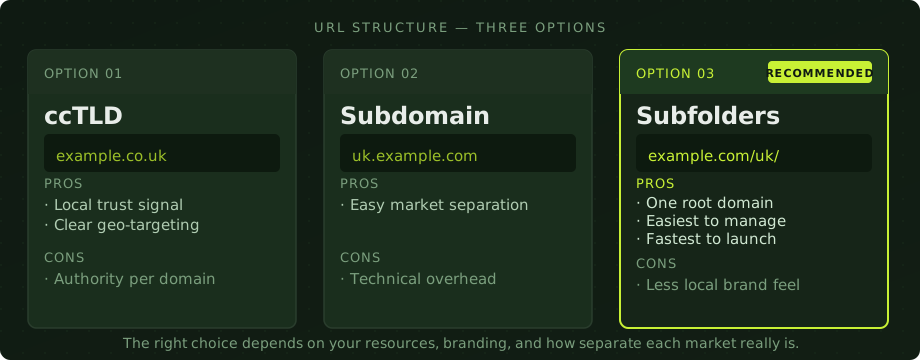
One of the first big decisions is URL structure. Do you use country-code domains like example.co.uk? Subdomains like uk.example.com? Or folders like example.com/uk/?
There is no one perfect answer. What matters is that the choice fits your business and stays consistent.
- Country-code domains can feel very local and trustworthy, but they take more effort to manage and build authority for.
- Subdomains can work, but they often create unnecessary technical overhead.
- Folders are usually the cleanest option for most businesses because they keep authority on one root domain and are easier to manage.
For a lot of companies, folders are the smartest starting point. They are simpler, faster to launch, and easier to support with internal linking and central authority. But that does not mean they are always right. Large brands with very separate country operations may need a different setup.
This is also where an international SEO consultant matters most. The wrong structure can slow every market down for years.
Hreflang is not optional when pages overlap
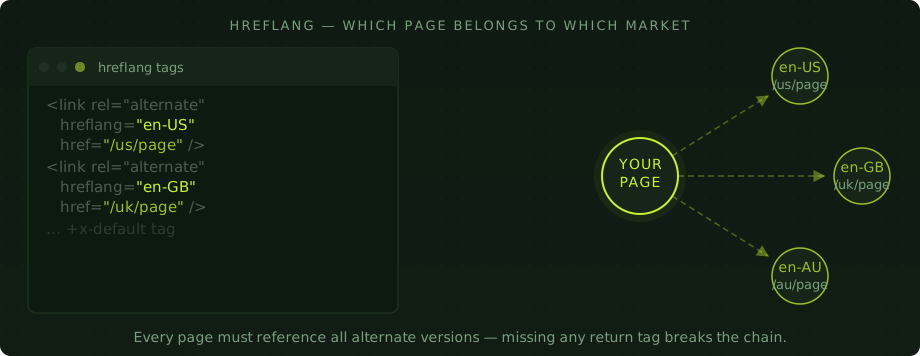
With similar pages for different countries or languages, hreflang is one of the main ways you tell Google which version belongs where. Without it, Google has to guess. Sometimes it guesses wrong.
Hreflang does not improve rankings by itself. It does something more basic and more important: it helps the right page show to the right user.
That means if you have:
- an English page for the US
- an English page for the UK
- an English page for Australia
...you should not assume Google will naturally understand the difference just because the pages live in different folders. Hreflang gives that signal directly.
It also has to be implemented properly. Wrong return tags, broken URLs, missing canonicals, or mixed language and country targeting can turn hreflang into a mess very quickly.
Translation is only part of the job
A lot of teams think international SEO means translation. That is only one piece of it.
Even if you are staying mostly English-first, different countries still search differently. The wording changes. The buying journey changes. The trust signals change. The commercial pages that matter most can also change.
For example:
- US users may search with one product term, while UK users use another
- one market may care more about fast delivery, another about returns or payment methods
- some markets search category pages more, while others search brand or comparison content more
This is why good international SEO is not just “copy the main site and localize later.” Each market needs its own search logic.
When your team is still trying to separate technical work from content work, read on-page vs off-page SEO. International SEO depends heavily on both.
Internal linking has to support the country logic
Once you have more than one market, internal linking becomes more important. Google needs help understanding which sections are global, which are regional, and which pages belong together.
Some common fixes:
- link country hubs clearly from the main navigation or relevant landing pages
- make sure local category pages link to local product or service pages, not always back to the main market
- avoid sending every user to the global homepage when a local equivalent exists
- keep breadcrumb, footer, and cross-market links clean and consistent
Weak internal linking is one of the reasons international sections stay underpowered even when the content itself is decent.
Technical details start to compound fast
The more markets you add, the more small technical mistakes pile up. Canonicals, hreflang, country folders, schema, XML sitemaps, language tags, pagination, filters, and duplicate templates all become harder to manage at scale.
This is why international SEO usually needs a stronger technical base than a single-market site. A few issues that might be minor on one site can become serious once they repeat across five or ten country versions.
With your site is already large, or if e-commerce is involved, the technical side matters even more. The same problems that hurt a store in one market can multiply across regions. That is why e-commerce SEO fundamentals and international SEO often overlap.
Authority does not spread evenly by itself
One strong domain does not automatically mean every country section will rank equally well. You still need authority signals that make sense in each market.
That can include:
- local links
- country-specific mentions
- regional press or partnerships
- clear local trust signals on the site
This matters a lot in competitive markets. A global brand can still struggle if its local pages look thin, generic, or disconnected from the region they are trying to rank in.
What a good international rollout looks like
A good rollout is usually boring in the best way. It is planned, structured, and careful.
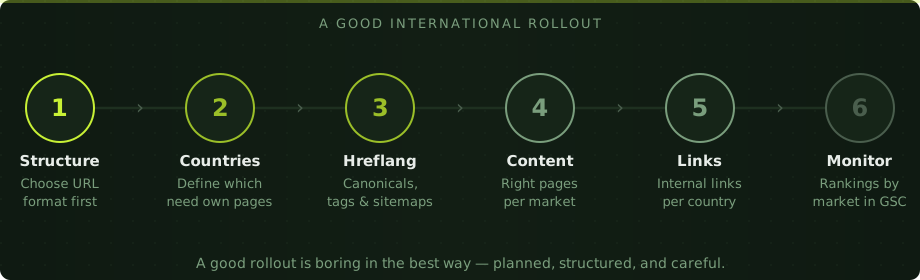
- Choose the right structure before launch.
- Define which countries and languages actually need their own pages.
- Set up canonicals, hreflang, and sitemaps properly.
- Make sure each market has the right commercial pages, not just translated filler.
- Build internal links that support each country section.
- Watch indexation and rankings market by market after launch.
That is a much safer path than launching everything at once and trying to debug it after traffic starts dropping.
The biggest international SEO mistake is not bad translation. It is weak targeting. If Google cannot tell which page belongs to which market, the whole setup starts fighting itself.
Before you expand into more markets, it also helps to run a proper SEO audit. It is much cheaper to fix weak structure, indexation, and internal linking before you multiply those problems across countries.
If multi-country growth means redesigning your structure or fixing a setup that already feels messy, our international SEO services and consultancy work are built for exactly this kind of problem.
Common international SEO questions
Do I need a different domain for every country?
No. Some businesses do, but many do not. Country folders are often the best starting point because they are easier to manage and keep authority on one main domain.
What is hreflang and do I really need it?
When you have multiple country or language versions of similar pages, usually yes. Hreflang helps search engines show the right version to the right users.
Can I just translate my current site?
Translation helps, but it is not enough by itself. You still need the right market targeting, structure, internal linking, and local search intent.
What is the biggest mistake businesses make?
Launching too many country versions without a clear plan. That usually creates duplication, wrong-country rankings, and weak internal structure.
Our international B2B case study shows what this looks like in practice across a worldwide query set, including the measurement caveats that come with cross-market tracking.