You can write a great answer and still get skipped by AI search. The reason is structure. AI tools do not read every word with equal care. They lean on the top of the page, scan the headings, and pull the clearest statement they can find. If your answer is hidden in the middle of a long paragraph, it often gets missed.
The good news is that the fix is simple and free. You do not need new tools or tricks. You need to lay your content out so the answer is easy to find. This guide shows what that looks like.
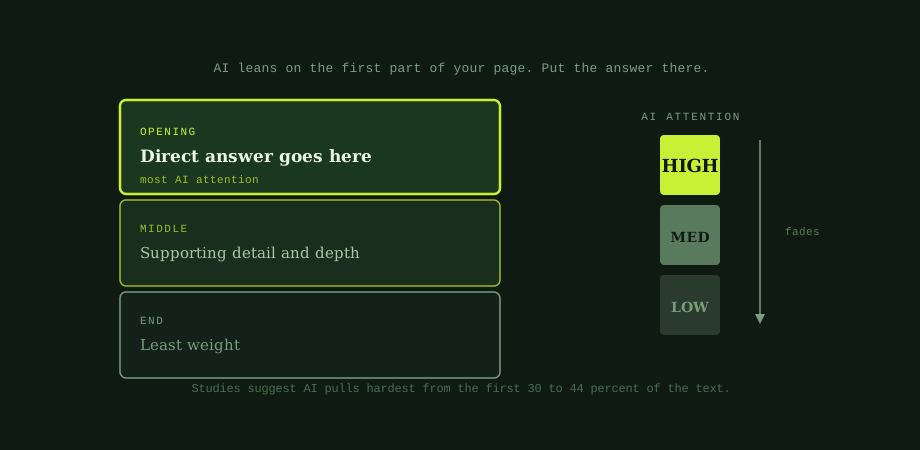
AI reads the top of your page most
AI systems process text in order. They give the early part more weight when they decide what a page is about and what to quote. Research in 2025 suggested AI tools pull most heavily from about the first 30 to 44 percent of a page.
This is a lot like how people skim. We read the opening, decide if the page answers our question, and move on. AI does something similar at scale.
The lesson is simple. Put your main answer near the top, in plain words. Do not build up to it slowly. Save the background and nuance for later, where they support the answer instead of hiding it.
What "structured for AI" actually means
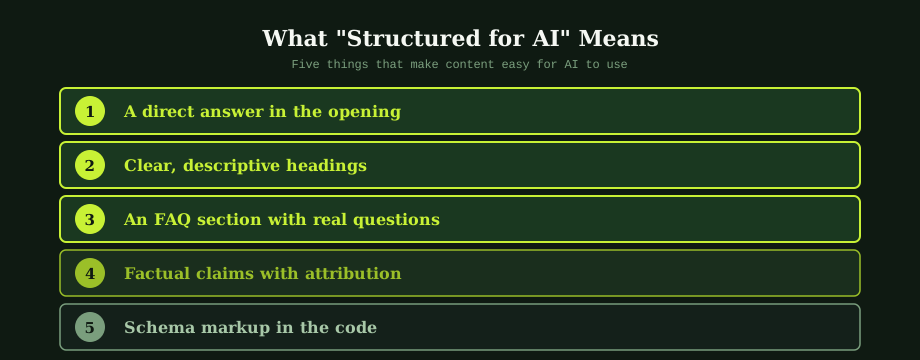
Structured content is content laid out so an AI tool can find and lift the answer easily. Five things make the biggest difference:
- A direct answer in the opening. State the answer in the first paragraph or two. Make it a clear sentence that can stand on its own when quoted.
- Clear, descriptive headings. Each heading should say what the section covers. "How much does it cost" beats "Pricing details." Headings guide both readers and AI.
- An FAQ section. Real questions with short, direct answers match how people ask AI tools. They also give clean, quotable chunks.
- Factual claims with attribution. When you state a fact or a number, say where it comes from. This builds trust and signals quality.
- Schema markup. This is code that tells search engines and AI what your content is. FAQ schema, Article schema, and Organization schema all help.
Direct answers beat slow build-ups
Many business pages bury the answer. They open with background, set the scene, and only answer the question halfway down. People skim past that. AI tools do too.
Compare these two openings for a page about SEO timelines:
- Buried: "SEO is a complex field with many moving parts that have changed a lot over the years..." The reader still does not know how long SEO takes.
- Direct: "Most websites see meaningful SEO results in three to six months. Competitive markets can take longer." Now the answer is right there, ready to quote.
The direct version is easier for a person to use and far more likely to be cited by an AI tool. You can still add all the nuance below. Just lead with the answer.
Headings and lists do real work
Headings and lists are not just decoration. They tell AI tools how your page is organised and what each part covers. They also break text into clean chunks that are easy to quote.
A few simple habits help:
- Use descriptive headings that contain the question or topic.
- Keep paragraphs short, often three or four sentences.
- Use lists for steps, options, and groups of related points.
- Put the most important point first in each section.
This is the same structure that makes a page readable for people. That overlap is the whole point, and it is why this connects to E-E-A-T and how it affects rankings. Clear, quality content wins in both normal and AI search.
Schema markup: the clarity layer
Schema markup is structured data in your page code. It states, in a way machines understand, what your content is. The useful types for most businesses:
- FAQ schema marks up your questions and answers.
- Article schema names the author, date, and topic.
- Organization and LocalBusiness schema define your business as a clear entity.
Schema is not magic. It will not lift a weak page. But on a strong page it removes doubt about what the content is, which makes it easier to use. The full beginner guide is in what is structured data.
Write for people, structure for both
Here is the key balance. The structure that helps AI is the same structure that helps people. A clear answer up top, good headings, short paragraphs, lists, and an FAQ serve both at once.
The trap is writing for the machine in a way that hurts the reader. Do not do these:
- Stuffing a page with dozens of fake questions.
- Repeating keywords in an unnatural way.
- Writing thin content that exists only to target an AI tool.
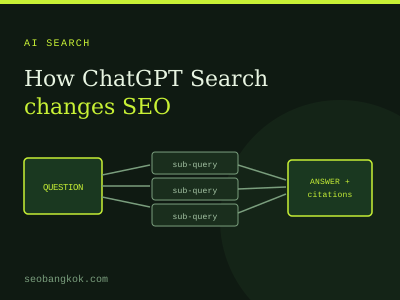
That kind of content is thin, and thin content does not get cited. The honest approach also wins, which is the point we make in how ChatGPT Search changes SEO strategy: AI search rewards real quality, structured clearly.
If you want help structuring your content so AI search tools can find and cite it, our AI search consultant covers the work in this guide. An experienced SEO agency can review your key pages and show you where the answers are buried. To see whether the work is paying off, learn how to check if your brand appears in AI search results.
Common questions
What does structured content mean for AI search?
Structured content is content laid out so an AI tool can find and lift the answer easily. In practice it means a few things: a direct answer in the opening paragraph, clear and descriptive headings, an FAQ section that matches real questions, factual claims backed by sources, and schema markup in the page code. AI tools read the top of a page most heavily and rely on clear signals about what each part says. Content that is one long block of text, with the answer buried in the middle, is hard for an AI to use even if the information is good.
Why do AI tools focus on the top of a page?
AI systems process text in order and give the early part more weight when deciding what a page is about and what to quote. Research in 2025 suggested that AI tools pull most heavily from roughly the first 30 to 44 percent of a page. This is similar to how people skim: the opening sets the topic and often holds the answer. The practical lesson is to state your main answer near the top, in plain words, rather than building up to it slowly.
Does schema markup help with AI search?
Schema markup helps because it tells search engines and AI tools what your content is in a clear, machine-readable way. FAQ schema marks up your questions and answers. Article schema identifies the author, date, and topic. Organization and LocalBusiness schema define your business as an entity. None of this is a magic trick, and schema alone will not get a weak page cited. But on a strong page it removes ambiguity and makes the content easier to use.
Is writing for AI different from writing for people?
Mostly no, and that is the point. The structure that helps AI tools (a clear answer up top, descriptive headings, short paragraphs, lists, and an FAQ) is the same structure that helps people read and skim. Good structure serves both at once. The danger is writing for the machine in a way that hurts the reader, such as stuffing a page with dozens of fake questions or repeating keywords. That produces thin content that neither people nor AI tools value.