Google AI Overviews (AIO) is not a separate ranking system running independently from standard search. It uses the same indexed web, the same authority signals, and the same content quality assessment as standard Google search. The difference is that it does not return ranked links. It synthesises a generated paragraph from the top-ranked sources and cites them below. Getting cited in an AI Overview is therefore primarily a consequence of being well-ranked in standard search, plus having content structured for extraction. The fuller treatment is in why structured content matters for AI search.
The broader context for why this matters, including AI search market share and citation volatility, is the breakdown is in the What Is AI SEO? guide. This post focuses specifically on the optimisation work for Google AI Overviews, which is the AI search feature with the most direct traffic impact for most Thai and ASEAN businesses.
What the research shows about AIO citation signals
Several research studies have analysed which page characteristics correlate with AI Overview citation. The consistent findings across SE Ranking, Growth Memo, and multiple independent analyses are as follows.
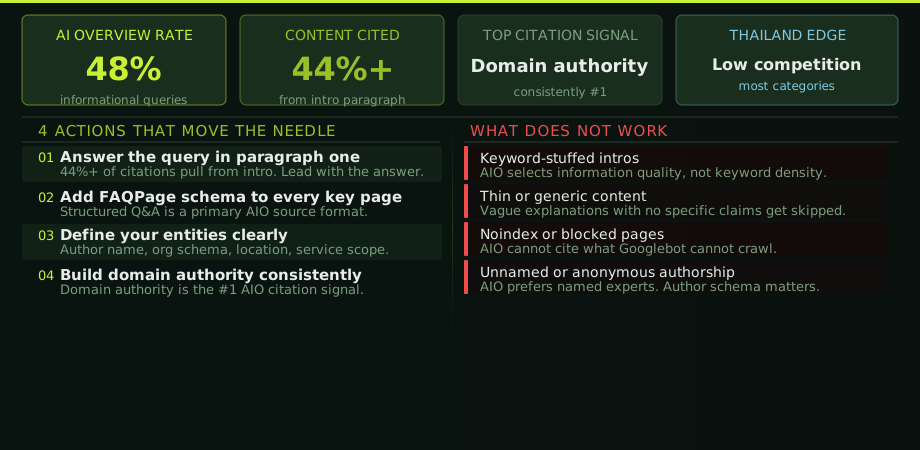
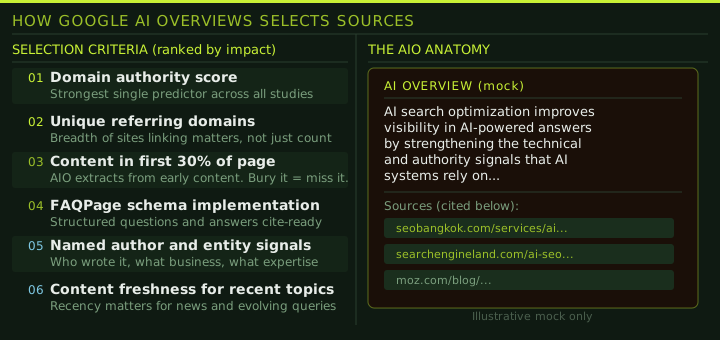
Domain authority is the single strongest predictor. Sites with higher domain authority scores are overrepresented in AI Overview citations across all query categories. This is the same signal that drives traditional Google rankings. There is no shortcut around it. Building domain authority through relevant backlinks, earning external mentions, and publishing authoritative content over time is the foundational work.
Content in the first paragraph accounts for 44% or more of citations. AI Overviews extract from early content more than late content. A page that buries its main factual claim in paragraph five or six is less likely to be extracted than one that states the answer in the first two sentences. This is a structural issue, not a content quality issue. Well-written content that builds to its conclusion in the traditional essay format is specifically disadvantaged for AI Overview extraction.
Unique referring domains matter as much as total backlink count. Breadth of sources linking to a page signals genuine authority to Google's systems. A page with links from 50 different domains is treated differently from one with 50 links from a single domain. This is relevant to link building strategy: diversity of linking sources is as important as volume.
FAQPage schema significantly increases citation probability. Structured question-and-answer markup is one of the formats AI Overviews most readily extract from. Pages with FAQPage schema that directly answer the queries the page targets are meaningfully more likely to appear in AIOs for those queries than equivalent pages without schema.
The four actions that move the needle
1. Answer the query in the first paragraph. Every page that targets an informational query should open with a direct, factual answer to that query. Not a preamble. Not "in this article, we will explore." The actual answer, stated clearly, in the first two to three sentences. This is the single most impactful structural change for AI Overview citation on most existing sites, because most existing content does not do this. The answer should be a complete sentence that could stand alone as a useful response to the query.
An example of what this looks like in practice: a page targeting "what is Google AI Overviews" should open with "Google AI Overviews are AI-generated summaries that appear above organic search results for informational queries. They cite multiple web sources below the generated text and appear for approximately 48% of informational searches." Not "Google has been making significant changes to search in recent years, including the introduction of AI-powered features."
2. Implement FAQPage schema on every key content page. FAQPage schema marks up question-and-answer pairs in a machine-readable format. It signals to Google's systems that specific answers are available on the page, which increases extraction probability for those answers. Every service page, blog post, and informational page you want cited should have at least three to five relevant FAQs implemented in schema, matching questions your target audience actually asks.
The structured data guide covers FAQPage schema implementation in detail, including the JSON-LD format that is most reliable for AI Overview extraction.
3. Define your entities clearly. AI Overviews work with entities. Your business needs to be unambiguously defined: its name, what it does, where it operates, who runs it, and its relationships to other entities (location, industry, expertise area). Organisation schema, LocalBusiness schema where applicable, and Person schema for named authors all contribute to entity clarity. Pages that clearly identify the who and what behind the content are more likely to be cited than anonymous pages that provide information without identifying the source.
4. Build domain authority consistently. Because domain authority is the strongest single citation predictor, no amount of content or schema optimisation compensates for a weak domain. Earning relevant backlinks, getting mentioned in industry publications, and building the external validation signals that constitute genuine authority remain the highest-leverage activities for AI Overview visibility, just as they are for traditional rankings.
What does not work despite the claims
A number of tactics have been promoted as AI Overview optimisation techniques that research does not support or that actively harm results.
Keyword-stuffing intro paragraphs with target terms does not increase AI Overview citation. AI Overviews select for information quality, not keyword density. An intro that crams the target keyword five times into the first sentence is less likely to be extracted than one that answers the question naturally with the keyword appearing once.
Publishing thin, AI-generated content at high volume does not produce AI Overview citations. The research consistently shows that established sites with strong authority are overrepresented in AIOs. New sites publishing AI-generated articles, even well-structured ones, rarely achieve consistent AIO citation because the authority signals are absent.
Noindexing pages to "control" which content appears in AI Overviews is not an optimisation strategy. Noindexed pages cannot be cited. Selectively noindexing strong content removes it from AI Overview consideration while noindexing weak content does nothing to improve citation of stronger pages.
Adding "for AI Overviews" sections or special AI-targeted markup not recognised by Google's structured data documentation provides no benefit. Google processes the recognised schema types and the page's natural language content. Non-standard markup is ignored.
Monitoring and realistic expectations
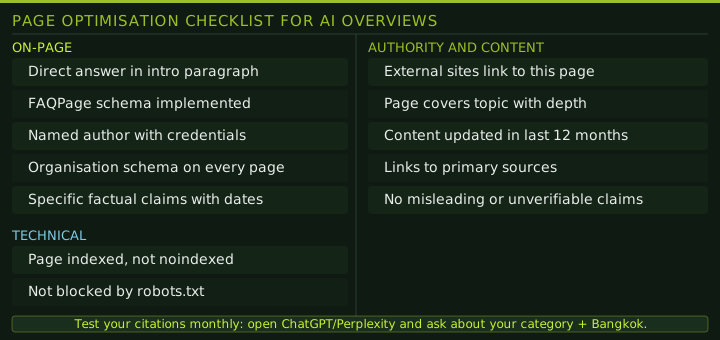
AI Overview citations are not stable. Between 40 and 60 percent of cited sources change month-to-month across query categories. This means appearing in an AI Overview today does not mean appearing in the same Overview next month. Consistent citation comes from strong consistent fundamentals, not from a one-time optimisation task.
Google Search Console now provides some visibility into AI Overview impressions and clicks in the Search Appearance filter. The data is incomplete and changing, but it provides useful directional information about which pages are being considered for AI Overview use and which queries trigger AIOs for your site.
A practical monitoring cadence: once per month, manually search your ten highest-priority queries in Google and record whether an AI Overview appears and whether your site is cited. This takes 15 minutes and provides more reliable data than any automated tool because AI Overviews vary by user, location, and session. For Thai businesses, running this test from a Thai IP with Thai language settings gives more representative results for your actual audience.
For a complete assessment of your current AI Overview citation status, the technical and content gaps that are limiting citation, and a prioritised action plan, the AI SEO in Thailand covers this through a structured audit starting from your existing site's position.
Google AI Overviews questions
What is Google AI Overviews?
Google AI Overviews is an AI-generated summary that appears at the top of Google search results for informational queries. It synthesises content from multiple web sources and cites them below the generated text. It appears for approximately 48% of informational queries in markets where the feature is active.
How does Google AI Overviews select which sources to cite?
Through the same retrieval process as standard search, weighted heavily toward domain authority and content quality. Top citation predictors are domain authority, unique referring domains, content in the first paragraph (44%+ of citations), FAQPage schema, and named entity clarity. The same signals that drive strong traditional Google rankings are the primary drivers of AI Overview citation.
Can I opt out of Google AI Overviews citations?
Yes. Add a nosnippet meta tag: <meta name="robots" content="nosnippet">. This prevents Google from extracting content for AI Overviews, but also removes the page from featured snippets and other rich results. For most sites, being cited is preferable to opting out.
Does appearing in Google AI Overviews affect my traffic?
AI Overview citations drive less click traffic per citation than a top-3 organic ranking because the AI answer satisfies some queries without a click. However, when users do click through from an AIO citation, the traffic tends to be higher-intent. For brand authority and informational content, citation is generally positive for visibility even when click volume is modest.
How long does it take to appear in Google AI Overviews?
No defined timeline. AI Overviews selection changes month-to-month, with 40-60% of cited sources changing regularly. Sites with strong domain authority and well-optimised content can see citation within weeks of implementing the signals. Sites with new domains or weak authority may not achieve consistent citation regardless of content optimisation. Domain authority, which takes months to years to build, remains the most reliable predictor.