ChatGPT Search has become a real source of website traffic. People now ask ChatGPT questions that they used to type into Google. When ChatGPT answers, it often cites and links to a few websites. If your site is one of them, you get visitors and trust.
But ChatGPT does not find and rank pages the way Google does. It works in its own way. If you understand that, you can give your content a better chance of being cited. This guide explains how ChatGPT Search picks sources, what that changes about SEO, and what to do about it.
ChatGPT sends most AI search traffic
Among AI tools, ChatGPT sends the largest share of referral traffic by far. Studies in 2025 put its share of AI search referrals at roughly 85 to 90 percent. The other tools, like Perplexity and Gemini, split the rest. The side-by-side with Gemini, Perplexity, and Claude that puts the ChatGPT-specific behaviour into context is in ChatGPT vs Gemini vs Perplexity for SEO.
These figures move around and the studies do not all agree. But the headline is clear. If you only prepare for one AI search tool, ChatGPT is the one that matters most right now.
How ChatGPT Search picks sources
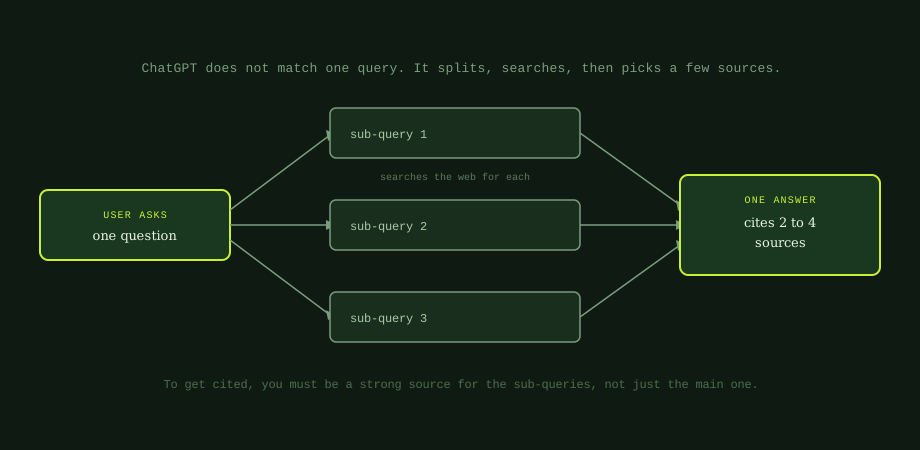
Here is the key idea. ChatGPT does not search for your exact question and pick the top result. It uses a process often called query fan-out.
It works like this:
- You ask one question.
- ChatGPT breaks it into several smaller sub-questions.
- It searches the web for each sub-question.
- It reads the results and writes one answer.
- That answer cites a few of the sources it found, usually two to four.
This matters more than it first sounds. A page can get cited even if it does not rank for the original question. It just needs to be a strong source for one of the sub-questions.
Say someone asks, "How do I choose an SEO agency in Bangkok?" ChatGPT might break that into sub-questions like "what does an SEO agency do," "how much does SEO cost in Thailand," and "questions to ask an SEO agency." It then cites the best page for each. To get cited, you want to be a strong answer for those smaller questions, not just the big one.
What this changes about SEO strategy
The fan-out process points to three shifts in how you plan content:
- Cover the whole topic, not one keyword. Answer the related sub-questions too. Depth across a topic now helps you appear for more of the fan-out queries.
- Answer clearly and early. Give a direct answer near the top of the page. ChatGPT needs to lift a clear statement out of your text. Burying the answer hurts you.
- Be a recognised name on the topic. ChatGPT leans on sources that the web treats as trusted. For the full picture, see what AI search engines look for when citing sources. Mentions and links from other sites help.
None of this is new SEO. It is good SEO, applied with AI search in mind. This is the core point we make in what AI SEO actually is: AI search does not replace SEO. It rewards strong SEO and exposes weak SEO faster.
How to raise your citation chances
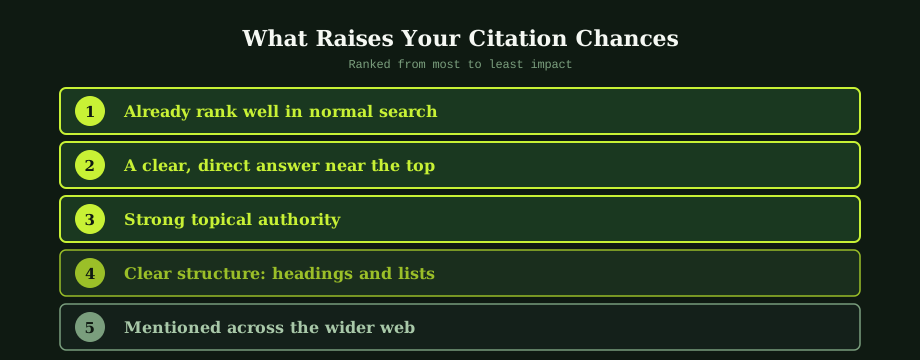
These are the things that matter most, in order:
- Rank well in normal search. ChatGPT Search uses web search to find sources. Pages that already rank are far more likely to be found and cited. This is the biggest factor.
- Give a clear, direct answer near the top. State the answer in plain words in the first paragraph or two. Make it easy to quote.
- Build real topical authority. Cover a subject in depth across several linked pages. This is the cluster approach we use across this blog.
- Use clear structure. Headings, short paragraphs, and lists make your content easy to parse. The deeper version is in why structured content matters for AI search. AI tools lean on the early part of a page, so put the important points high up.
- Earn mentions across the web. When other sites mention your business, you become a recognised entity. That raises trust and citation odds.
The detailed version of the first point, for Google's own AI answers, is in how to optimise for Google AI Overviews. The signals overlap a lot. Strong content wins in both.
What does not work
A lot of advice about "AI optimisation" is hype. These things do not help:
- Secret AI tricks. There is no hidden tag or keyword that forces a citation. The signals are the normal quality signals.
- Stuffing your page with questions. Adding dozens of fake FAQ entries does not help and can look spammy.
- Writing for the model instead of the reader. Content that reads like it was made to game an AI tends to be thin. Thin content does not get cited.
Want the wider picture of how these terms fit together? the AEO vs GEO vs SEO guide cuts through the acronyms.
The Thailand angle
Whether ChatGPT Search matters for you depends on your audience:
- International and English-speaking buyers. ChatGPT Search is already a real referral source. It is worth preparing for now.
- The local Thai market. Adoption is growing, but Google and LINE still lead. Traditional SEO and local presence stay the priority.
Either way, the work is the same. Strong, clear, well-structured content helps you in normal search and in AI search at once. You do not have to choose. The trust and quality signals behind all of this are the same ones in E-E-A-T and how it affects rankings.
Being cited by ChatGPT, Perplexity, and Google's AI Overviews is a different optimisation discipline from ranking on the standard SERP. Our AI SEO in Bangkok covers the work in this guide. An experienced SEO specialist in Thailand can audit your current visibility, starting from how to check if your brand appears in AI search results.
Common questions
How does ChatGPT Search pick its sources?
ChatGPT Search does not just match one query. It uses a process called query fan-out. It breaks your question into several smaller sub-queries, searches the web for each one, and then writes a single answer that cites a few of the sources it found. This means a page can get cited even if it does not rank for the exact original question, as long as it is a strong source for one of the sub-queries. To get cited, your content needs to answer the smaller related questions clearly, not only the headline topic.
Does normal SEO still matter for ChatGPT Search?
Yes, more than ever. ChatGPT Search relies on web search results to find sources. Pages that already rank well in normal search are far more likely to be found and cited. There is no separate trick that bypasses good SEO. The strongest signal for getting cited is being a high-quality, well-ranked page on the topic. AI search does not replace SEO. It rewards good SEO and exposes weak SEO faster.
How do I increase my chances of being cited by ChatGPT?
Focus on a few things. Rank well in normal search first, because that is how ChatGPT finds sources. Give a clear, direct answer near the top of the page so it is easy to quote. Build genuine topical authority by covering a subject in depth across several pages. Use clear structure with headings and lists so the content is easy to parse. Earn mentions across the wider web so your business is a recognised entity. These are the same signals that drive good traditional SEO, which is why fixing your core SEO is the right first step.
Should Thai businesses worry about ChatGPT Search?
It depends on the audience. For businesses targeting international and English-speaking buyers, ChatGPT Search is already a real source of referral traffic and worth preparing for. For businesses serving the local Thai market, adoption is growing but Google and LINE still dominate, so traditional SEO and local presence remain the priority. The good news is that the work that prepares you for ChatGPT Search is the same work that improves your normal SEO. You do not have to choose between them.