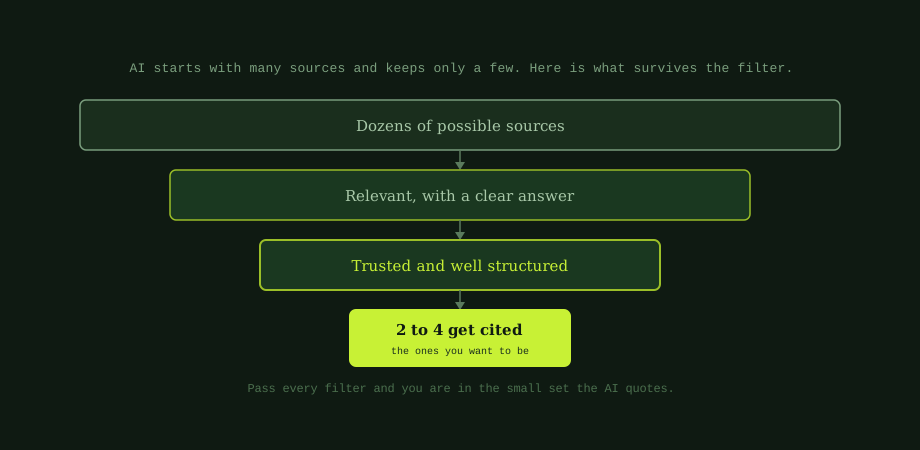
An AI answer looks simple from the outside. You ask a question, you get a clear reply, and a few sources are linked at the bottom. Behind that, the engine sifted through many possible pages and kept only a few. Being one of those few is the whole game.
The good news is that the choice is not random or mysterious. AI engines look for the same things a careful person would look for in a good source. This guide breaks down the four main ones, so you know exactly what to aim for.
The four things AI engines look for
When an AI engine decides what to cite, it filters for four traits. A page needs all four to make the final cut:
- Relevance. Does the page clearly answer the exact question being asked?
- A clear answer. Can the engine find and lift a direct statement, without digging?
- Trust. Is the source one that ranks well and looks credible?
- Structure. Is the content laid out so the engine can parse it easily?
Miss any one of these and your chances drop sharply, even if your information is excellent. Let us look at each.
1. Relevance: answer the real question
This sounds obvious, but it is where many pages fail. The engine is not looking for pages about your topic in general. It is looking for pages that answer the specific question asked.
A page titled "Our SEO Services" is about a topic. A page that answers "how much does SEO cost in Thailand" is about a question. The second one is far more likely to be cited for that query. Build pages and sections around real questions, not just broad topics.
2. A clear answer the engine can lift
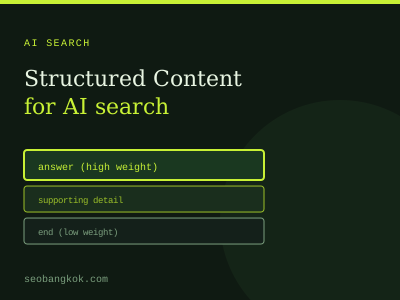
AI engines quote. They need a clean, direct statement they can pull out and use. If your answer is spread across three paragraphs, or buried in the middle of a long section, it is hard to lift.
State the answer plainly and early. One clear sentence that stands on its own is worth more than a beautifully written build-up. This is the core idea in why structured content matters for AI search: put the answer where it can be found.
3. Trust: be a source worth quoting
AI engines lean on sources they can trust. The strongest signal of trust is simple: does the page already rank well in normal search? Engines use web search to find candidate sources, so well-ranked pages get into the pool first.
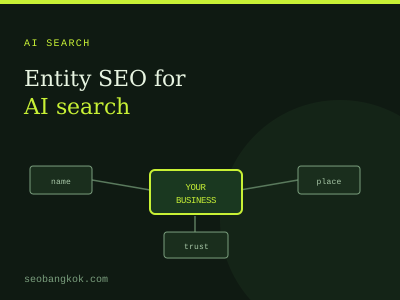
Trust also comes from the wider picture. Is your business known and mentioned across the web? Do you show real expertise? This is the same trust idea behind E-E-A-T and how it affects rankings, explored for AI in E-E-A-T in the age of AI search, and it connects to entity SEO: a business the engine recognises is a business it can cite with confidence.
4. Structure: make it easy to read
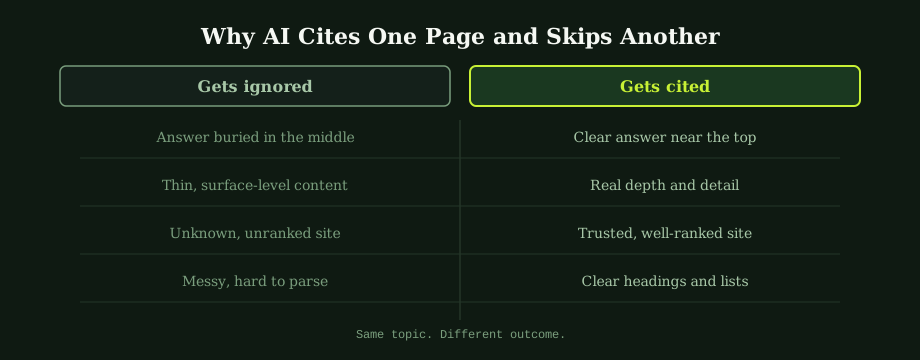
Structure is how the engine understands your page. Clear headings tell it what each section covers. Short paragraphs and lists break the content into clean chunks. Schema markup states your facts directly.
A page can have all the right information and still lose if it is one long, messy block. The engine struggles to find the answer, so it picks an easier source instead. Good structure removes that friction.
How this connects to ranking
You may have noticed these four traits look a lot like good SEO. That is the point. Ranking well in Google is the strongest single factor in being cited, because it gets you into the candidate pool. The other three traits then decide who wins from that pool.
So the order is clear:
- Rank well first. This gets you considered at all.
- Answer clearly. This makes you easy to quote.
- Build trust. This makes you safe to quote.
- Structure well. This makes you easy to parse.
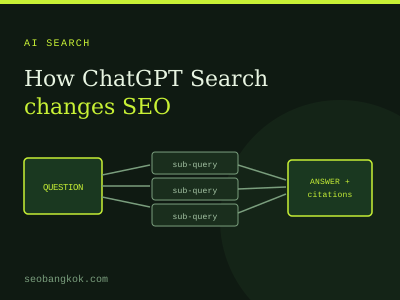
This is why we keep saying AI search rewards good SEO rather than replacing it, a theme more on that in how ChatGPT Search changes SEO strategy.
What does not earn citations
Since the traits are about genuine quality, the shortcuts do not work. These do not help:
- Keyword stuffing. Repeating phrases does not make a page more relevant to an engine that understands meaning.
- Fake question lists. Stuffing a page with dozens of FAQ entries looks thin and adds no trust.
- Claiming authority you do not have. Trust is earned through real ranking and recognition, not stated on the page.
The reliable path is to be a genuinely strong source. To check whether the work is paying off, see how to check if your brand appears in AI search results.
Becoming a source AI engines cite is a deliberate positioning choice, not a side effect of ranking well. Our AI search optimisation service covers the relevance, clarity, trust, and structure work in this guide. A trusted SEO company in Thailand can audit where your current content meets the bar and where it falls short.
Common questions
What do AI search engines look for when citing sources?
AI search engines weigh four main things when choosing which sources to cite. First, relevance: does the page clearly answer the question being asked. Second, a clear answer: can the engine find and lift a direct statement, rather than digging it out of a long block of text. Third, trust: is the page from a source that ranks well and is recognised as credible. Fourth, structure: is the content laid out with clear headings and sections so the engine can parse it. A page that meets all four is far more likely to be cited than one that misses any of them.
How is being cited by AI different from ranking in Google?
They are closely linked but not identical. Ranking well in Google is the strongest single factor in being cited, because AI engines use web search to find candidate sources and favour pages that already rank. But AI citation adds extra filters on top. The audit methodology for measuring how often your sources actually get cited is in how to run an AI visibility audit. Among well-ranked pages, the AI then prefers the one with the clearest direct answer, the best structure, and the strongest trust signals. So ranking gets you into the candidate pool, and clarity, structure, and trust decide who actually gets cited.
What does LLM visibility optimization mean?
LLM visibility optimization means improving the chance that large language model tools, like ChatGPT and Google AI Overviews, mention and cite your business. It is not a separate set of tricks. It is the work of making your content the kind of source these tools prefer: relevant, clearly answered, trustworthy, and well structured. In practice this overlaps almost entirely with strong SEO. The same pages that rank well and answer clearly are the ones AI tools cite.
Can I force an AI engine to cite my site?
No. There is no tag, keyword, or trick that forces a citation. AI engines choose sources based on relevance, clarity, trust, and structure, and these come from genuine content quality and authority, not from manipulation. Attempts to game the system, such as stuffing pages with questions or keywords, tend to produce thin content that gets ignored. The reliable path is to be a genuinely strong source: rank well, answer clearly, build trust, and structure your content.