Search used to match words. You typed a phrase, and the engine found pages with those words on them. That has changed. Modern search and AI tools work with entities, which are real things they understand: businesses, people, places, products.
The shift is often called "from strings to things." A string is just text. A thing is a known entity, with facts and relationships attached. AI search leans heavily on this. To recommend your business, an AI tool needs to understand it as a thing, not just spot your name in some text. That is what entity SEO builds.
What an entity actually is
An entity is something the system recognises as a distinct, known item. Your business is an entity. So is your founder, your city, and each service you offer.
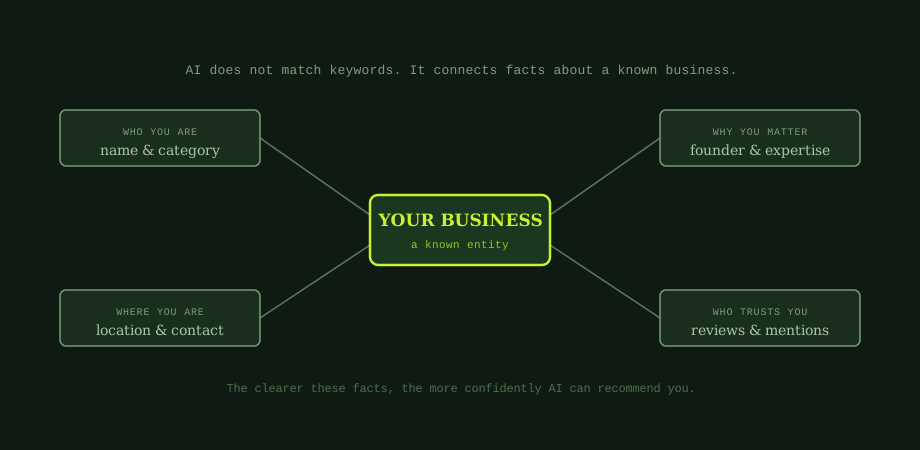
For each entity, the system tries to understand its facts and connections:
- What it is. Your business name and category.
- Where it is. Your location and contact details.
- Who is behind it. Your founder and their expertise.
- Who trusts it. Reviews, mentions, and links from other sites.
When these facts are clear and consistent, the system understands your business well. When they are vague or conflicting, it does not. That understanding, or lack of it, decides whether an AI tool will recommend you.
Why this matters so much for AI search
Think about how an AI tool answers "who is a good SEO consultant in Bangkok?" It does not just scan for pages with those words. It draws on what it understands about businesses that fit: who they are, where they are, and whether they are trusted.
To be the answer, you need to be a business the AI understands and trusts, which is part of what AI search engines look for when citing sources. That requires two things:
- The AI knows you exist and what you do. Your identity is clear and consistent across the web.
- The AI sees you as trustworthy. Other sources recognise and reference you.
Where your business is a clear entity, the AI can recommend you with confidence. If it is vague, the AI has nothing solid to stand on and picks a competitor it understands better. This is the same trust idea behind E-E-A-T and how it affects rankings, applied to your whole business identity.
How to build your business as an entity
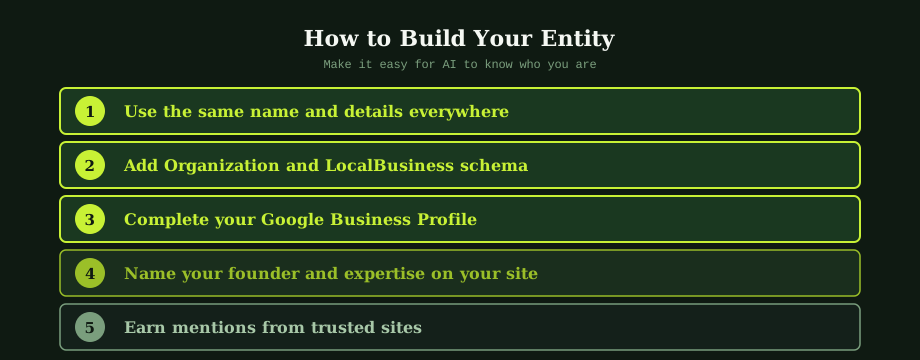
Five steps build your entity. Work through them in order.
1. Use the same name and details everywhere
Use exactly the same business name, address, and phone number on every site: your own pages, Google, directories, and social profiles. Small differences, like "Co." in one place and "Company" in another, create doubt. Consistency tells the system these listings are all the same business.
2. Add Organization and LocalBusiness schema
Schema is code that states your facts in a way machines read directly. Organization schema defines your business. LocalBusiness schema adds your location and hours. This removes guesswork about who you are. The basics are in what is structured data.
3. Complete your Google Business Profile
Your Google Business Profile is one of the strongest entity signals, especially for local businesses. Fill in every field: category, services, hours, photos, and description. Keep it accurate and active. This is a core part of local SEO for Thailand businesses.
4. Name your founder and expertise
People are entities too. An about page that names your founder, explains their background, and shows real expertise builds trust in your business. Vague, faceless sites are harder to trust and harder to recommend. Say who you are and why you know your subject.
5. Earn mentions from trusted sites
Being referenced across the web is how you become a recognised entity. Mentions and links from trusted, relevant sites tell the system that other credible sources know you. This is slow work, but it is what separates a known business from an unknown one.
Entity SEO is not a separate thing
Here is the reassuring part. Entity SEO is not a new discipline you have to bolt on. It is the clarity-and-consistency side of good SEO, which has always mattered for local search and trust.
What changed is the stakes. AI search relies heavily on understanding entities, so a clear identity now matters more than ever. But the work overlaps almost entirely with strong traditional SEO. Consistent details, schema, a complete profile, a clear about page, and authority across the web all help in both normal and AI search.
This is the theme across our AI search guides, including how ChatGPT Search changes SEO strategy. The fundamentals do not get replaced. They get more important. Once you have built your entity, you can confirm the impact by learning how to check if your brand appears in AI search results. The wider brand SEO discipline that this entity work sits inside is in what is brand SEO.
Defining your business as a clear, well-described entity is the foundation of being cited by AI search. Our AI search optimisation service covers the schema, profile, and authority work in this guide. An experienced SEO consultant in Bangkok can review where your entity signals are weakest and tighten them.
Common questions
What is an entity in SEO?
An entity is a thing that search engines and AI tools recognise as a distinct, known item, such as a business, a person, a place, or a product. It is different from a keyword. A keyword is just a string of text. An entity is a thing the system understands, along with its facts and relationships: what it is, where it is, who runs it, and who trusts it. Entity SEO is the work of making your business a clearly defined entity, so search engines and AI tools understand who you are rather than just matching words on a page.
Why does entity SEO matter for AI search?
AI tools answer questions by drawing on what they understand about the world, including businesses. To recommend you, an AI tool needs to know that you exist, what you do, where you operate, and that you are trustworthy. If your business is a clearly defined entity, with consistent facts across the web and recognised authority, the AI can mention you with confidence. If your business is vague or inconsistent, the AI has nothing solid to work with and will favour competitors it understands better.
How do I build my business as an entity?
Focus on five things. Use exactly the same business name, address, and phone number everywhere online, because inconsistency confuses the system. Add Organization and LocalBusiness schema to your site so the facts are machine-readable. Complete your Google Business Profile fully and accurately. Name your founder and explain your expertise on your about page, since people are entities too and real expertise builds trust. Finally, earn mentions and links from trusted sites, because being referenced across the web is how you become a recognised entity.
Is entity SEO different from normal SEO?
It is part of normal SEO, not a separate discipline. Entity SEO emphasises clarity and consistency about who your business is, which has always mattered for local SEO and trust. What has changed is that AI search makes it more important. AI tools rely heavily on understanding entities, so the businesses with clear, consistent, well-defined identities have an advantage. The good news is that the work overlaps almost entirely with strong traditional SEO: consistent details, schema, a complete Google Business Profile, a clear about page, and authority across the web.