Here is a scenario every business knows. Someone suggests a change to a page. Someone else disagrees. You go with whoever is most senior or most confident. Nobody actually knows if it helped.
A/B testing solves this. Instead of arguing, you let your visitors decide. Show half of them one version and half another, then measure which performs better. The winner is not a matter of opinion. It is what the data says. This is the backbone of serious conversion rate optimisation. The Thai-market CRO application that this testing methodology supports is in conversion rate optimization in Thailand. See how to set up conversion tracking in GA4.
How an A/B test works
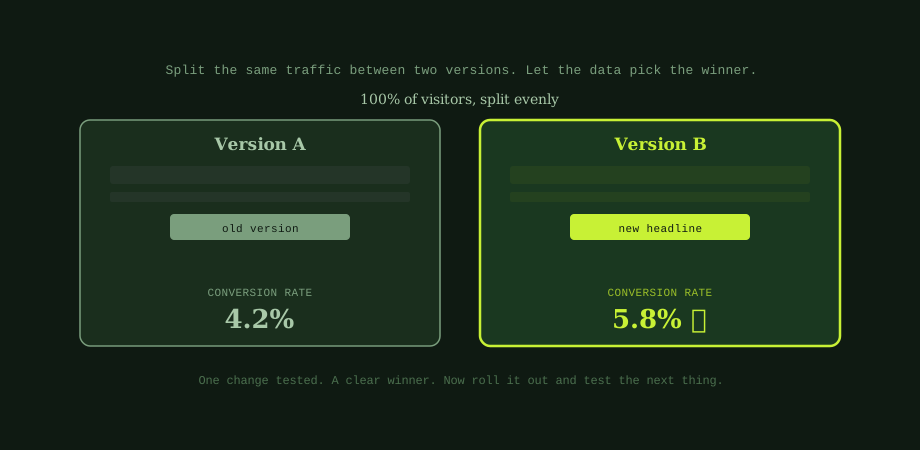
The idea is simple. You create two versions of a page: version A, your current one, and version B, with a single change, such as a different headline. Your testing tool then splits incoming visitors randomly, sending half to each version at the same time.
Because the split is random and simultaneous, the two groups are alike in every way except the change you made. So if version B converts better, the change is almost certainly the reason. You measure the conversion rate of each, and the higher one wins. Then you roll out the winner and test the next idea.
The five rules of a valid test
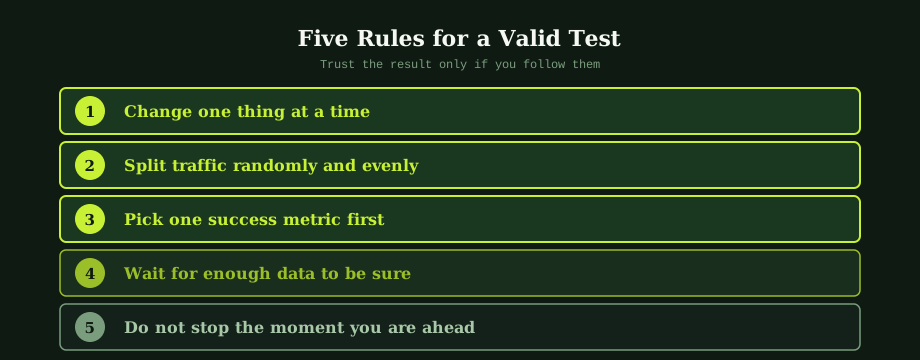
A test is only useful if its result is trustworthy. These five rules are what make it so.
1. Change one thing at a time
If version B has a new headline and a new button and a new image, and it wins, you have no idea which change did it. Test one element at a time. It is slower, but it is the only way to learn what actually works.
2. Split traffic randomly and evenly
Your testing tool should send visitors to each version at random, at the same time. This keeps the two groups comparable. Comparing this week's version B to last month's version A is not a test; too many other things changed.
3. Pick one success metric first
Decide what winning means before you start, usually your main conversion: enquiries, sales, sign-ups. If you wait to see the data and then pick whichever metric looks good, you will fool yourself. One clear metric, chosen up front.
4. Wait for enough data
This is where statistics matter, but the principle is simple: a few visitors prove nothing. You need enough people in each version, and enough conversions, before a difference is real rather than chance. On lower-traffic pages this takes time. Tracking it properly relies on good analytics setup.
5. Do not stop the moment you are ahead
This is the most common and costly mistake. Early in a test, one version often jumps ahead by luck. If you stop there and declare victory, you act on noise. Let the test run its planned course, usually at least one to two full weeks, so it covers different days and gathers enough data.
What to test first
You can test almost anything: headlines, calls to action, button wording, layout, images, copy length, form fields, how you present pricing. But not everything is worth testing. Start with what moves the needle most:
- The headline. Often the biggest single influence on whether people stay.
- The call to action. Its wording, prominence, and offer.
- The core offer. How you frame what the visitor gets.
These usually matter far more than small cosmetic tweaks like a button shade. And test your most important pages first, where a better conversion rate is worth the most. This pairs directly with landing page optimisation: testing is how you prove which landing page changes actually work. You can apply the same thinking to Google Ads copy, where the platform tests ad variations for you.
Common mistakes to avoid
Beyond stopping early, watch for these:
- Testing on too little traffic. If a page gets few visitors, a clean test may take months. Sometimes a confident single change, measured over time, is more practical.
- Testing trivial things. Spending weeks on a button colour while the headline is weak is poor use of effort.
- Ignoring the result. If the data says your favourite version lost, believe the data. That is the whole point.
Does A/B testing hurt SEO?
A fair worry, but no, not when done correctly. Google has confirmed that legitimate A/B testing is fine. Just avoid showing search engines different content than users, use a canonical tag so the original page is clear, and end tests once you have a result rather than running them forever. Follow the standard guidelines and testing is a normal, accepted practice with no ranking risk.
A/B testing turns your website into something that improves over time, guided by evidence rather than opinion. Each test that finds a winner lifts your results a little, and those gains compound. If you want a structured testing programme on your most valuable pages, our digital consultancy and SEO consulting cover conversion testing alongside traffic. An experienced SEO specialist in Bangkok can help you decide what to test first and read the results properly.
Common questions
What is A/B testing?
A/B testing is a way to compare two versions of something, such as a web page, to see which performs better. You show version A to half your visitors and version B, with one change, to the other half, then measure which gets more of the result you want, like enquiries or sales. Because the two groups are random and see the page at the same time, the difference in results can be attributed to the change you made. This lets you improve based on real evidence rather than opinion. It is the most reliable way to know whether a change actually helps, which is why it sits at the heart of conversion rate optimisation.
How long should an A/B test run?
Long enough to gather sufficient data for a trustworthy result, which depends on your traffic and conversion volume rather than a fixed number of days. A high-traffic page might reach a reliable result in a couple of weeks, while a low-traffic page could take much longer or never gather enough data for confidence. As a rule, run a test for at least one to two full weeks to cover different days of the week, and until each version has accumulated enough conversions that the difference is unlikely to be chance. Stopping early, the moment one version pulls ahead, is the most common mistake and produces results that do not hold up.
What can I A/B test?
Almost any element that might affect whether visitors take action. Common tests include headlines, calls to action and their wording, button colour and placement, page layout, the length and angle of copy, images, form fields, and pricing presentation. The key is to test one element at a time so you know what caused any change. Start with the elements most likely to move the needle: the headline, the main call to action, and the overall offer usually matter more than small cosmetic tweaks. Testing your most important pages, where conversions have the biggest value, gives you the best return on the effort involved.
Does A/B testing hurt SEO?
Not when done correctly. Google has stated that legitimate A/B testing is fine and does not harm rankings. The things to avoid are cloaking, which means showing search engines different content than users, and running tests indefinitely. Use proper testing tools, keep variations genuinely similar in intent, use a canonical tag so search engines understand the original page, and end tests once you have a result rather than leaving them running forever. Done this way, A/B testing is a normal, accepted practice. The benefits to your conversion rate far outweigh any risk, as long as you follow the standard guidelines rather than trying to game search engines.