Getting someone to your page is only half the job. The other half is what happens once they arrive. This is where a lot of marketing budget quietly leaks away: traffic comes in, but visitors leave without doing anything.
A landing page is any page where people land after clicking, whether from an ad, a search result, or a link. Its purpose is to convert that visitor into a lead or a sale. Landing page optimisation is the work of making more of them do exactly that. It is the natural partner to conversion rate optimisation in general.
The one-job rule
The single most useful idea in landing page design is this: a landing page should have one job. One goal, one main action you want the visitor to take.
When a page tries to do everything, it does nothing well. The visitor is offered too many choices and takes none. When a page has one clear goal, every element can point towards it, and the path to acting becomes obvious. Before you touch a page, decide its one job. Everything else follows from that.
The elements that convert
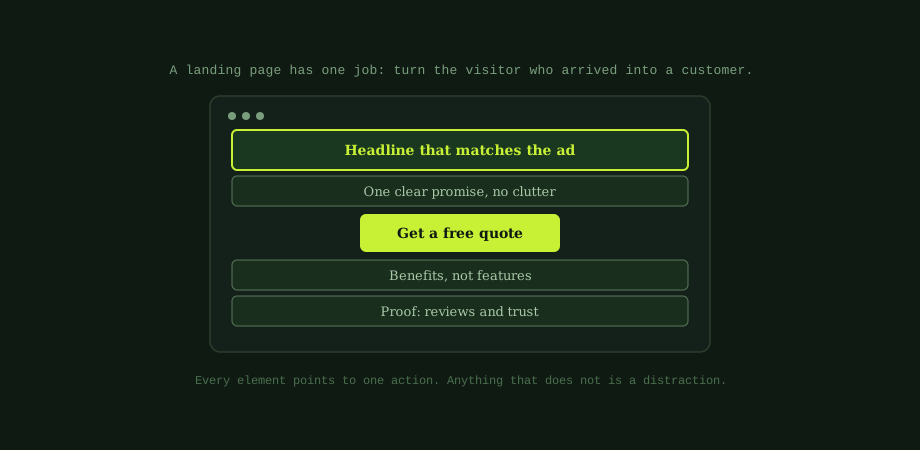
A page that converts tends to have the same building blocks, each doing a specific job.
- A headline that matches the source. It should reflect what the visitor clicked, so they feel they are in the right place.
- One clear promise. A simple statement of what they get, with no clutter.
- One obvious call to action. A single, prominent button or form, not five competing options.
- Benefits, not features. Speak to what the customer gains, not just what you do.
- Proof and trust. Reviews, results, or recognisable clients that show you can be trusted.
Notice what is missing: navigation menus, unrelated links, and other distractions. On a landing page, those pull attention away from the one job.
Six ways to lift conversions
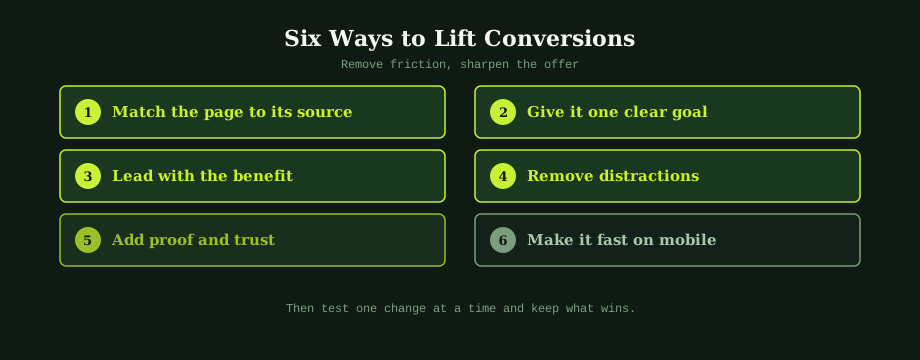
1. Match the page to its source
This is message match, and it is powerful. If an ad promises a free quote for emergency plumbing, the page must open with exactly that. A mismatch creates doubt and visitors leave. Strong message match also lifts your Google Ads Quality Score, since landing page experience is part of it. It is the page-side partner to writing ad copy that gets clicks.
2. Give it one clear goal
Decide the single action and make it the obvious next step. Remove competing calls to action. If you want enquiries, do not also ask people to sign up, follow you, and read your blog on the same page.
3. Lead with the benefit
Open with what the visitor gains, not your company history. People decide in seconds whether a page is worth their time. Answer their question fast: what is in this for me?
4. Remove distractions
Strip away anything that does not serve the one job. On a focused landing page, that often means hiding the main navigation and cutting unrelated links, so the only meaningful action is the one you want.
5. Add proof and trust
People are cautious. Reduce their risk with proof: genuine reviews, real results, client names or logos, and clear contact details. Trust signals turn interest into action, especially for higher-value decisions.
6. Make it fast on mobile
A slow page loses visitors before they read a word, and most traffic is now mobile. Speed is a conversion issue as much as an SEO one; more on that in page speed for business owners. Test your page on a phone and a normal connection, not just your fast office wifi.
Measure, then test
You cannot optimise what you do not measure. Set up conversion tracking so you know your starting conversion rate, which is part of setting up Google Analytics 4. Without it, you are guessing.
Once you can measure, improve by testing one change at a time. The cleanest method is an A/B test: some visitors see the original, others see a version with a single change, and you compare. This needs enough traffic to be reliable. If you do not have the volume, make one considered change, measure before and after over a fair period, and keep what clearly helps. Either way, change one thing at a time so you know what worked.
Why this is high-value work
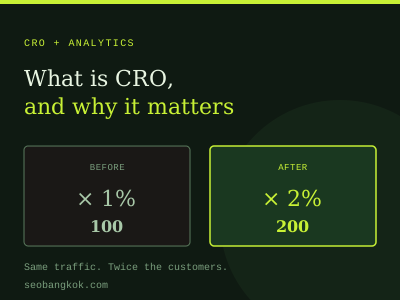
Landing page optimisation has a special quality: it improves results from traffic you already have. If you double your conversion rate, you double your leads without spending a baht more on traffic. That makes it some of the highest-return work in marketing, and it compounds with everything else. Better rankings and better ads bring more visitors; a better landing page turns more of them into customers.
Traffic without leads is almost always the page, not the channel. Pages get changed too rarely, tested too vaguely, and judged by the wrong numbers, while the channel gets blamed. Our digital consultancy and SEO consulting cover conversion as well as traffic. An SEO specialist in Bangkok can review your key landing pages and find the friction costing you customers.
Common questions
What is landing page optimisation?
Landing page optimisation is the work of improving a page so that more of the visitors who arrive on it take the action you want, such as making an enquiry, booking a call, or buying. A landing page is where people land after clicking an ad, a search result, or a link, and its single job is to convert that visitor. Optimisation means removing the friction and doubt that stop people acting, and sharpening the things that encourage them: a clear headline that matches what they clicked, one obvious call to action, benefit-led copy, proof they can trust you, and a fast, distraction-free page. Done well, it lifts results from traffic you already have.
What makes a landing page convert?
A landing page converts when it makes one action feel obvious and low-risk. The key elements are a headline that matches the ad or link the visitor clicked, so they feel they are in the right place; one clear goal with a single prominent call to action rather than competing options; copy that leads with the benefit to the customer; proof such as reviews, results, or recognisable clients; and the removal of distractions like menus and unrelated links that pull attention away. On top of that, the page must load fast and work well on mobile. When all of these line up, the visitor's path to acting is clear and the conversion rate rises.
Why is message match important for landing pages?
Message match means the landing page reflects the promise of whatever the visitor clicked to get there. If an ad offers a free quote for emergency plumbing and the page that opens talks about general home services, the visitor feels a jolt of doubt and many leave. When the headline and offer on the page mirror the ad or search result, the visitor feels reassured they are in the right place and continues. Strong message match also supports your Google Ads Quality Score, because landing page experience is one of its components. So matching the page to its source improves both your conversion rate and, for paid traffic, your cost per click.
How do I test landing page changes?
Test one change at a time so you know what caused any difference. The cleanest method is an A/B test, where some visitors see the original page and others see a version with a single change, such as a different headline or call to action, and you compare which converts better. For this to be reliable you need enough traffic and enough conversions to be confident the result is not chance, which can take time on lower-traffic pages. If you cannot run a formal test, make one considered change, measure the conversion rate before and after over a fair period, and keep changes that clearly help. Either way, change one thing at a time and let the data guide you.