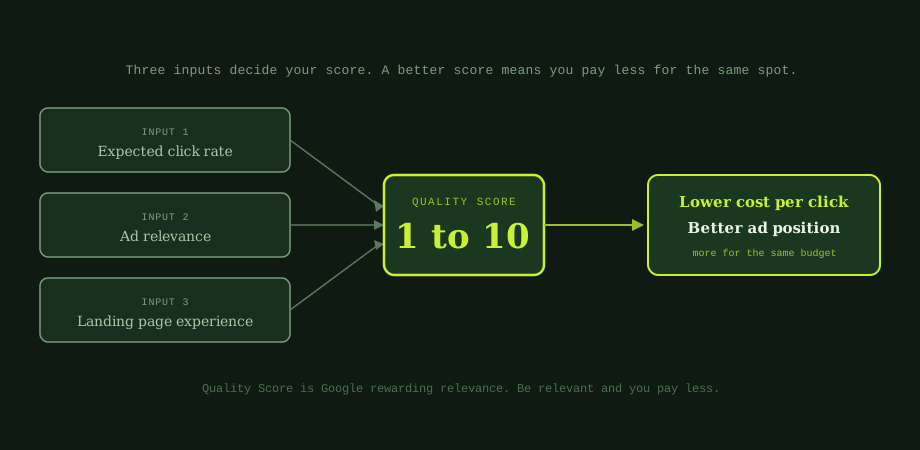
Quality Score is one of the most important numbers in Google Ads, and one of the most misunderstood. In plain terms, it is Google's rating of how relevant and useful your ad is for a given keyword, scored from 1 to 10.
Why should you care? Because it decides how much you pay. A high Quality Score lowers your cost per click and lifts your ad position. A low one means you pay more for the same spot, or do not show at all. Quality Score is simply Google rewarding relevance. The more relevant your ad, the less you pay.
The three things Quality Score measures
Quality Score is built from three components. Each one answers a question about relevance:
- Expected click-through rate. How likely is your ad to be clicked when it shows? This reflects how appealing and relevant your ad looks.
- Ad relevance. How closely does your ad match the keyword and the search behind it?
- Landing page experience. When someone clicks, does the page deliver what the ad promised, quickly and clearly?
Together these track relevance across the whole journey: from the search, to the ad, to the page. If all three line up, your score is high. If any one breaks the chain, your score drops.
Why Quality Score affects your budget
Here is the part that matters for your wallet. Google does not simply give the top spot to the highest bid. It combines your bid with your Quality Score to decide both your position and your actual cost.
So two advertisers bidding the same amount get different results. The one with the higher Quality Score pays less per click and often ranks higher. Over a month, that gap adds up to a large difference in cost per lead. Improving relevance is one of the most effective ways to stretch a budget, which connects directly to setting a Google Ads budget that makes sense.
How to improve your Quality Score
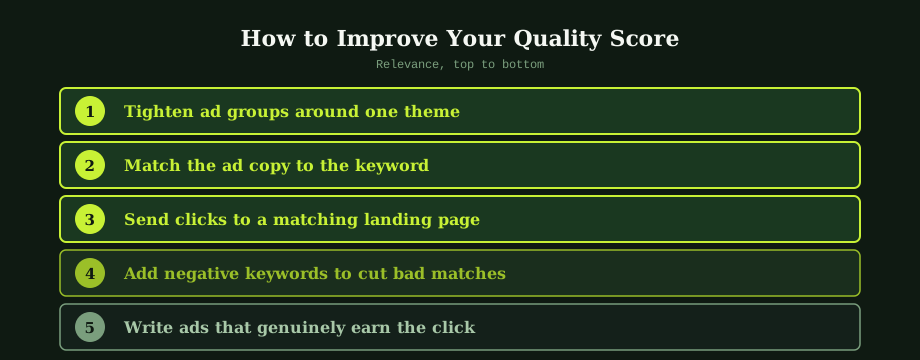
You improve Quality Score by improving the three things it measures. Here is how, in order of impact.
1. Tighten your ad groups around one theme
A common problem is cramming many unrelated keywords into one ad group. Then a single ad has to serve them all, and it cannot be relevant to any. Keep each ad group focused on one tight theme, so the ad can speak directly to it. This is the foundation more on that in Google Ads account structure.
2. Match your ad copy to the keyword
When the ad reflects the exact words someone searched, relevance rises and so does click-through rate. This is the same principle behind writing ad copy that gets clicks. Tight ad groups make this easy, because each group has one theme to write for.
3. Send clicks to a matching landing page
The page must deliver what the ad promised. If your ad is about "emergency plumbing" but the click lands on a generic homepage, the experience breaks and your score suffers. Send each ad to a page that matches its message and loads fast. See landing page optimisation. This is where conversion rate optimisation and Quality Score overlap.
4. Add negative keywords
Negative keywords stop your ads showing for searches that do not fit. They work hand in hand with your keyword match types. That keeps your click-through rate healthy and your spend focused. For example, a premium service might add "free" and "cheap" as negatives. Fewer irrelevant impressions means a stronger score.
5. Write ads that genuinely earn the click
Expected click-through rate is a big component, so an ad that people actually want to click lifts your score. Lead with a real benefit, include the keyword, and give a clear call to action. Relevance and appeal go hand in hand.
Do not chase the number for its own sake
A high Quality Score is good, but it is a means, not the goal. The real goal is profitable conversions. It is possible to obsess over a perfect score on a keyword that does not actually convert, which wastes effort.
So treat Quality Score as a health signal. A low score usually points to a relevance problem worth fixing. A high score means your ads and pages are well matched to searches. Focus on relevance and conversions, and a strong Quality Score tends to follow on its own.
Being still deciding whether paid ads are the right channel at all means our guide on SEO vs PPC can help you choose where to put your budget first.
Quality Score sits between you and a lower cost per lead. Earn it properly and the same budget pulls more leads. Our PPC management in Bangkok handles the relevance work from keyword to landing page. Our SEO company in Bangkok also runs the landing-page improvements that lift Quality Score directly.
Common questions
What is Quality Score in Google Ads?
Quality Score is Google's rating, from 1 to 10, of how relevant and useful your ad is for a given keyword. It is built from three components: expected click-through rate, ad relevance, and landing page experience. A higher Quality Score tells Google your ad is a good match for the search, so Google rewards you with a lower cost per click and a better ad position. In effect, Quality Score is Google's way of rewarding relevance. Advertisers who make their ads and pages genuinely match what people search for pay less than those who do not, even for the same keyword and position.
How does Quality Score affect cost?
Quality Score directly affects how much you pay per click. Google combines your bid and your Quality Score to decide your ad position and your actual cost. A high Quality Score can lower your cost per click significantly, while a low one means you pay more to appear in the same spot, or you do not appear at all. This is why Quality Score matters so much for budget. Two advertisers can bid the same amount, and the one with the higher Quality Score pays less and ranks higher.
How do I improve my Quality Score?
Improve the three things it measures. For expected click-through rate, write ads that genuinely earn the click. For ad relevance, keep ad groups tight around a single theme and match your ad copy to the keyword. For landing page experience, send clicks to a page that matches the ad and loads fast. Practical steps include tightening loose ad groups, mirroring the keyword in the ad and on the landing page, adding negative keywords to stop irrelevant matches, and improving slow or off-topic landing pages.
Is a higher Quality Score always better?
A higher Quality Score is generally better because it lowers your cost and improves your position, but it is a means, not the goal. The real goal is profitable conversions. It is possible to chase a perfect Quality Score on a keyword that does not convert well, which wastes effort. Treat Quality Score as a useful health signal: a low score usually points to a relevance problem worth fixing, and a high score means your ads and pages are well matched to searches. Focus on relevance and conversions, and a strong Quality Score tends to follow.