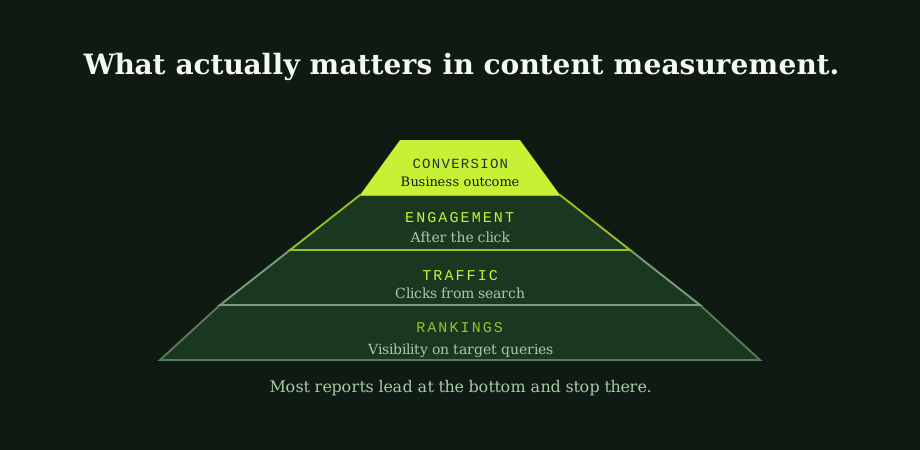
The right way to think about content measurement is as a stack of layers, each one closer to the business outcome than the one below it. The bottom layer is where the data is most abundant. The top layer is where the data matters most. A useful content report works up the stack, not down it. The reporting framework that turns these measurement metrics into stakeholder-ready outputs is in SEO reporting: what to show stakeholders. The mistake most reports make is reporting heavily on the bottom layer because it is easiest to pull, and barely touching the top layer because the data is harder to assemble. That trade is backwards.
The wider question of which SEO metrics actually matter, beyond just content, sits in which SEO metrics actually matter. This piece focuses specifically on the content layer of that broader question.
What pageviews don't tell you
Pageviews aggregate every kind of visit into a single number. The number hides more than it reveals.
A page can have stable pageviews while its organic search visibility collapses. Traffic is being substituted from social shares, email newsletters, or direct visits, while the search-driven portion silently dies. The pageview number looks fine. The SEO programme is in trouble.
A page can have growing pageviews while losing positions on its main target keywords. Traffic is coming from a long tail of less valuable queries while the high-intent commercial queries are dropping out of the top ten. Volume is up. Quality is down. The pageview number lies in both directions.
Pageviews also do not distinguish between organic, paid, referral, and direct traffic. They do not tell you which queries are bringing visitors. They do not show ranking improvement or decline. They are the wrong metric for SEO decisions even though they are the first metric most analytics dashboards display.
The metrics that actually matter
Working up the pyramid from base to apex.
Rankings (base layer). The most abundant data and the most predictive of long-term outcomes. Which queries does the article appear for, and at what position? The data lives in Search Console under the Performance report, filtered by page. Rankings are the upstream signal that everything else downstream depends on; a page that loses its rankings loses its traffic, its engagement, and its conversion in that order. The downstream question of how that data rolls up into ROI reporting sits in how to track SEO ROI.
Traffic (second layer). Clicks from organic search to the page over a time window. Search Console reports this in the same Performance view. The useful comparison is not the absolute number but the trend: clicks this ninety-day window against clicks the previous ninety-day window, segmented by query if possible. Total traffic to the page is less informative than traffic by query, because the latter shows which parts of the page's keyword set are working and which are not. The keyword research foundation that this measurement work depends on is in SEO keyword research for Thai businesses.
Engagement (third layer). What happens after the click. This is where Google Analytics genuinely adds value: average engagement time, scroll depth where you have it instrumented, return visits, and the path users take from this page to others on the site. Engagement signals matter for understanding content quality and for feeding ranking signals indirectly. They do not directly tell you whether the SEO programme is working, but they tell you whether the content is doing its job once readers arrive.
Conversion (apex). The business outcome. Whatever your conversion goal is, this is where you measure it: goal completions, leads, sign-ups, sales, or whatever else the page is intended to drive. Conversion data lives where your goal tracking lives, which is usually Analytics with goal events set up. The pyramid narrows because most pages do not drive direct conversion; that is the point. The pages that do drive conversion are disproportionately important to the SEO programme.
Where to find each metric
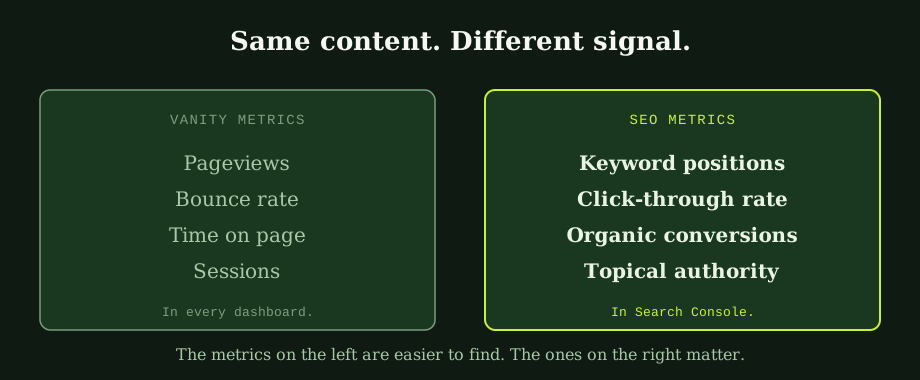
The tool map for the four layers.
- Search Console (Performance report). Rankings, impressions, clicks, click-through rate. Filter by page to see the data for a specific article. Filter by query to see which keywords are driving visibility. Compare date ranges to see trend. This is the primary tool for content SEO measurement, and most teams underuse it badly.
- Google Analytics (or your equivalent). Engagement, time on page, conversion attribution. Segment by source/medium = organic search to get the SEO-relevant slice of the data. Most analytics dashboards default to all-traffic views, which mix organic with everything else and obscure the SEO signal.
- Rank tracking tool (Semrush, Ahrefs, Sistrix, or similar). Daily position tracking for a chosen set of target keywords, with historical graphs. Search Console gives you average position over a period; rank trackers give you daily granularity, which matters when investigating sudden changes.
- CRM or sales system. Downstream attribution of organic visits to actual revenue, where the data is available. This is the hardest connection to make cleanly, and it is also the one most leadership audiences care about most.
The right tool for any single measurement question depends on which layer of the pyramid it sits on. Most measurement failures are not about the tool; they are about asking the wrong tool the question.
The cohort view: comparing pieces over time
Single-article measurement is useful but noisy. The signal is in the portfolio view: comparing all your content together, identifying patterns, and managing the portfolio as a portfolio rather than a collection of individual pages.
Three cohort cuts that produce most of the actionable insight.
- By age cohort. Group articles by publication month or quarter. Compare how each cohort's traffic has evolved. Are newer cohorts performing differently from older ones at the same age? That tells you whether your content programme has been getting better, worse, or flat.
- By topic cluster. Group articles by the cluster they belong to. Identify which clusters are growing in aggregate traffic and which are flat or declining. Cluster-level patterns are usually more informative than article-level patterns because clusters compound or decay together.
- By content type. Group articles by format: how-to, comparison, listicle, deep-dive, case study. Compare conversion rates and ranking trajectories across the formats. The format that performs best for your audience often surprises teams when they look at the data instead of guessing.
The cohort view is also what links measurement to the wider question of when to refresh content. The dedicated mechanics of that refresh decision live in content refresh for SEO.
How to report content performance to leadership
The audience for content performance reports is usually not other SEOs. It is leadership, stakeholders, or clients who need to make decisions based on the data. The right report works backwards from the decision being made.
A minimum-viable monthly report.
- One headline number. Usually total organic clicks this month vs the same month last year. Most leadership audiences want a single direction-of-travel indicator they can carry into the next conversation.
- Top three movers. The three articles whose rankings or traffic moved the most in either direction this period. Be specific about why; speculation about cause does more harm than honest "we are investigating."
- The next quarter of work. Connect the data to the plan: which articles are being refreshed, which clusters are being built out, which queries are being targeted next. Numbers without a plan do not lead to decisions.
- One thing the data made us reconsider. Something that changed in the data that changed your view of the programme. This is what builds credibility with leadership over time: showing that the team responds to data, rather than just defending the plan.
What to leave out: long lists of metrics, dashboard screenshots without commentary, comparisons of metrics that are not comparable, and any metric that has not connected to a decision in the last six months.
Common measurement mistakes
Patterns that show up repeatedly when content programmes struggle to demonstrate value.
- Reporting on what is easy to pull rather than what matters. Pageviews are in every dashboard; query-level ranking data takes a few clicks to assemble. Most reports default to pageviews because of the friction, not because pageviews are the right metric.
- Not segmenting by traffic source. Mixing organic with paid, social, and direct makes it impossible to attribute SEO impact. All measurement on SEO content should be filtered to organic search only.
- Comparing windows that are not comparable. Seasonality, holidays, and known traffic events make year-over-year and month-over-month comparisons require context. A drop in July compared to June is rarely the same as a drop in July compared to last July.
- Treating average position as a real number. Search Console's average position is an aggregate across many queries and many sessions. It moves for many reasons that have nothing to do with content quality. For specific-query position tracking, use a rank tracker daily, not Search Console averages.
- Ignoring the conversion layer. The apex of the pyramid is the only metric most non-SEO stakeholders genuinely care about. Reports that stop at the engagement layer leave the most important question unanswered.
The realistic-timeline question that good measurement requires sits in how long does SEO take; measurement without realistic timelines produces panic reports that flatten when expectations are set correctly.
The honest version of content measurement
Content performance has four layers. Most reports cover the bottom two and call it measurement. The top two are where the business decisions get made, and the data to support them lives in tools that most content reports do not open. The fix is structural: a measurement framework that works up the pyramid, sources data from where it actually lives, segments by organic traffic, and connects every metric to a decision someone needs to make.
Our SEO agency Bangkok work starts measurement engagements by mapping the current reporting against the four layers, identifying where the gaps are, and rebuilding the report around the metrics that produce decisions instead of the metrics that fill dashboards. Our SEO agency in Thailand service includes the Search Console set-up and the rank tracking that most teams skip for cost reasons and then regret. An SEO expert in Bangkok can audit your current content reporting in a single session and identify which layers of the pyramid you are actually measuring against.
Common questions
What is the best way to measure SEO content performance?
The most useful framework runs through four layers. The first is rankings: which queries your content appears for and at what position. The second is traffic: clicks from those queries. The third is engagement: what happens after the click. The fourth is conversion: what business outcome the visit produced. Most reports focus on the second and third layers because they are easy to pull and look impressive in slides. The first and fourth are usually the most informative for SEO decisions.
Why are pageviews a bad metric for SEO content?
Pageviews aggregate every kind of visit into a single number that hides what is actually happening. A page can have stable pageviews while its organic search visibility collapses, because traffic is being substituted from other channels. A page can have growing pageviews while losing positions on its main target keywords, because traffic is being driven by a less valuable long-tail. Pageviews do not distinguish between organic, paid, referral, or direct traffic; they do not tell you which queries are bringing visitors; they do not show ranking improvement or decline.
What metrics should I report on for SEO content?
The minimum useful report for any single piece of content includes: the top five queries the page ranks for and their current position; the change in position for those queries over the last quarter; impressions and clicks from organic search over the last ninety days against the prior ninety; and any goal completions or conversions attributed to organic traffic on that page. The minimum useful report for a content portfolio adds: the share of total organic traffic the portfolio is generating, the share that is growing, the share that is decaying, and a list of the top decay candidates for the next refresh cycle.
What's the difference between Search Console and Google Analytics for content measurement?
Search Console measures what happens in Google's search results: which queries trigger your pages, what position they appear at, how often they get clicked, and the click-through rate. Google Analytics measures what happens on your site after someone arrives: what pages they visit, how long they stay, what they convert on. The two tools are complementary, not interchangeable. For SEO content specifically, Search Console is the primary measurement source because it shows the visibility and click data that drive SEO outcomes. Most teams default to Analytics because the dashboard is more familiar, but the SEO-relevant data lives in Search Console.