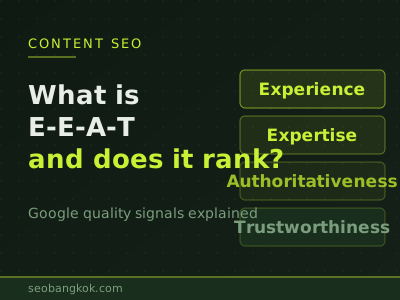
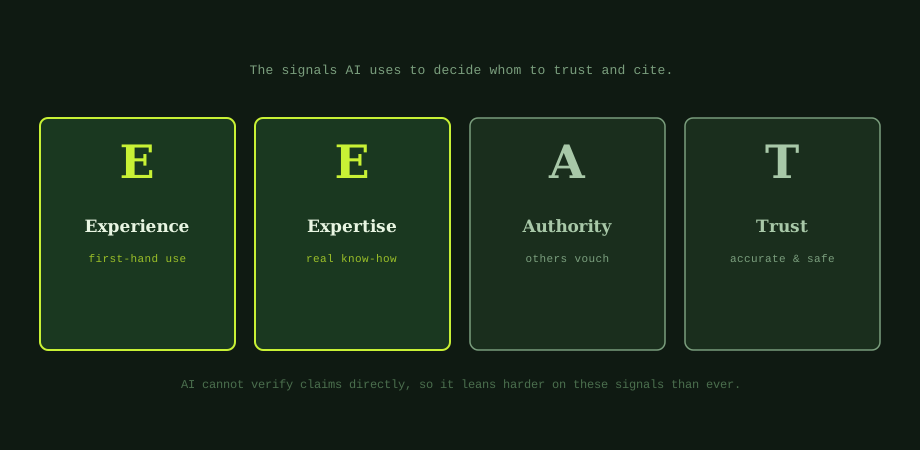
E-E-A-T stands for Experience, Expertise, Authoritativeness, and Trustworthiness. It is the framework Google uses to judge how much to trust a piece of content, especially on topics that affect health, money, or safety. The medical-specific application of these rules sits in SEO for medical clinics in Thailand. For a fuller introduction, see what E-E-A-T is and how it affects rankings.
This guide is about one thing: why AI search makes E-E-A-T matter more than ever, and what to do about it. The short answer is that an AI tool cannot check the real world, so it leans on trust signals to decide whom to believe.
Why AI raises the stakes
Think about how an AI tool answers a question. It reads many sources, picks a few to trust, and writes one answer. It has no way to independently verify who is right. It cannot run a test or visit a shop. So it relies on the signals that suggest a source is credible.
That changes the game in one big way. The gap between a trusted source and an unknown one gets wider. Two pages can say the same thing, but the AI cites the one with stronger credibility signals. Weak E-E-A-T does not just lower your ranking now. It gets you skipped in AI answers in favour of a competitor the tool trusts more.
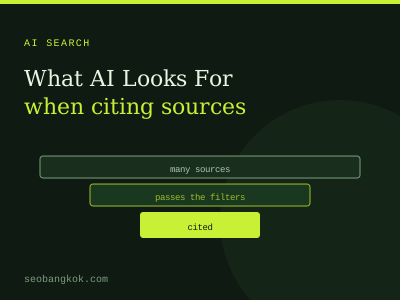
This is the same idea we cover in what AI search engines look for when citing sources. Trust is one of the four traits that decide who gets cited.
The four signals, and how to show each
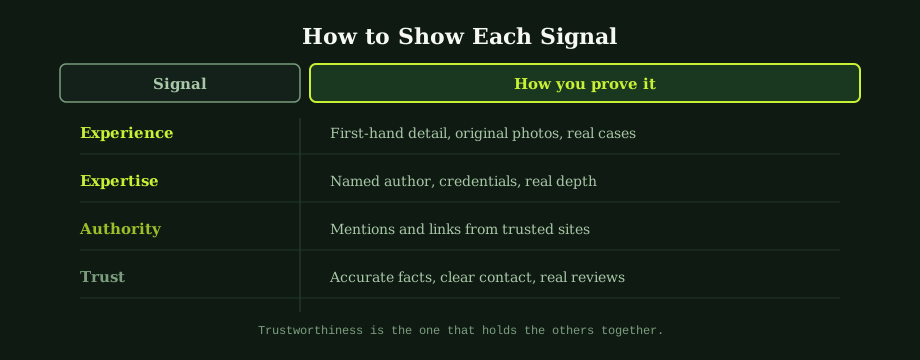
You cannot just say you are trustworthy. You have to show it through real signals. Here is how to demonstrate each part.
Experience: show you have done it
Experience is first-hand knowledge. It is the detail that only comes from actually doing the work. Show it through:
- Original photos, not stock images.
- Real case studies and specific examples.
- Lessons and details a beginner would not know.
This is the newest part of the framework, and it is hard to fake. A page that clearly comes from real experience stands out to both readers and AI tools.
Expertise: show you know your subject
Expertise is genuine knowledge of the topic. Show it through:
- A named author, not an anonymous page.
- Clear credentials and background.
- Real depth, not a thin summary.
A clear about page that explains who runs the business and why they know the subject does a lot of work here.
Authority: show others recognise you
Authority is recognition from outside your own site. You cannot grant it to yourself. It is built through:
- Mentions and links from trusted, relevant sites.
- A business that is known across the web.
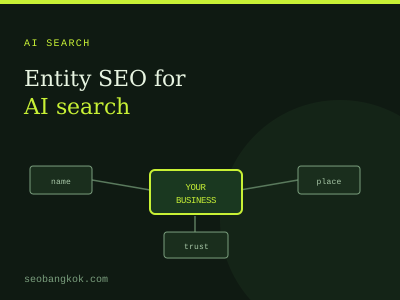
- A clear, consistent identity, which connects to entity SEO.
Trust: tie it all together
Trustworthiness is the one that holds the others together. It comes from:
- Accurate, honest information.
- Clear contact details and a real business behind the site.
- Genuine reviews and a professional, secure site.
Google has said trust is the most important member of the group. Without it, experience, expertise, and authority count for little.
What this means in practice
You do not need a separate "E-E-A-T project." You need to make sure your content and your site clearly show who you are and why you can be trusted. A few practical priorities:
- Put a real name and face on your content. Anonymous content is hard to trust.
- Write from real experience. Add the specific details only you have.
- Keep your facts accurate. One wrong claim can cost trust across the whole site.
- Build authority slowly. Earn mentions and links over time.
This is also why thin, AI-generated content with no real author tends to fail. It has no experience, no named expertise, and no earned authority. It is the opposite of what these signals reward.
E-E-A-T is high-value SEO
Here is the encouraging part. E-E-A-T is not separate from SEO. It is the quality-and-trust side of it. The work that builds it, clear authorship, real depth, accurate information, and earned authority, also lifts your normal rankings.
So improving your E-E-A-T pays off twice. It helps you rank, and it helps you get cited by AI tools. That makes it some of the highest-value work you can do, a point that runs through how ChatGPT Search changes SEO strategy too. AI search rewards the businesses that are genuinely worth trusting. To see where your site stands overall, run the 10-point AI readiness audit.
Showing experience, expertise, authority, and trust across a site used to be optional content marketing. AI search has made it foundational. Our AI search optimisation service covers the content and authority work in this guide. As a Bangkok SEO agency, we treat E-E-A-T as core architecture, not garnish. The recovery workflow when an update affects rankings sits in how to recover from a Google algorithm update. The mechanics of refreshing content to maintain those quality signals live in content refresh for SEO.
Common questions
What is E-E-A-T and why does it matter for AI search?
E-E-A-T stands for Experience, Expertise, Authoritativeness, and Trustworthiness. It is the framework Google uses to judge content quality, especially on topics that affect health, money, or safety. It matters more for AI search because AI tools cannot verify claims by themselves. They cannot test a product or check a fact in the real world. So they lean on the signals that suggest a source is credible: real experience, genuine expertise, recognition from others, and trustworthiness. A business that shows strong E-E-A-T is far more likely to be cited and recommended by AI tools.
Did AI search make E-E-A-T more important?
Yes. E-E-A-T always mattered for ranking, but AI search raises the stakes. When AI tools answer a question, they choose a few sources to trust and quote. They have no way to independently verify who is right, so they rely heavily on credibility signals. This means the gap between a trusted source and an unknown one grows wider. Strong E-E-A-T helps you get cited; weak E-E-A-T gets you skipped in favour of a competitor the AI trusts more. The framework did not change, but its importance increased.
How do I show experience and expertise on my website?
Show experience through first-hand detail: original photos, real case studies, specific examples, and lessons that only come from actually doing the work. Show expertise by naming the author, stating their credentials and background, and covering topics with genuine depth rather than surface-level summaries. A clear about page that explains who runs the business and why they know their subject helps a lot. Vague, anonymous content signals neither experience nor expertise, and both AI tools and readers treat it as less trustworthy.
Is E-E-A-T different from normal SEO?
E-E-A-T is part of SEO, not separate from it. It describes the quality and trust side of SEO, the part that goes beyond keywords and technical setup. The work to build it overlaps with good SEO generally: clear authorship, genuine depth, accurate information, a complete and professional site, and authority earned through mentions and links. What AI search changed is the weight these signals carry. So improving your E-E-A-T improves both your normal rankings and your chances of being cited by AI tools.